Friday, August 16, 2013

What is Good Fiction?


By Susan

What is good fiction?

Elizabeth Lynd: As a reader, I really just want to be entertained, and if I can be moved while I'm at it, that's gold. As a writer, I am always on the lookout for clever crafting that I can apply to my own work. How did the writer structure the sentence, the paragraph, the chapter, the novel? I've learned a ton about how to write (and how not to write) from reading. I guess that's one reason I always give credit to big readers for being likely good writers.

I travelled over 3400 miles in my eight-year-old Chevrolet this summer.  My daughters and I touched thirteen states, swam in four different lakes in four different states, hiked in the forest of my childhood, and made the most of visiting far-flung family and friends. We also spent that time browsing, buying and reading good fiction. My older daughter, who turned fourteen on our journey, spent the majority of her reading time with Tolkien. My younger daughter tackled her school-assigned summer reading list, and I set out to complete all the novels of my instructors at the Appalachian Writers Workshop, which I attended for the second time over the last week in July. I was prepared to learn all I could about good fiction.

Julie Kibler: Good literature is in the eye of the beholder ... errr, mind of the reader. Is it a premise that draws me in? Do I struggle to put it down? Or think about it for days or years after I finish? Or sigh deeply at a turn of phrase or perfect ending? Or feel as if I simply spent time in the company of characters I'd hang out with in real life? Or feel stretched and challenged by a point of view or idea I hadn't considered before? That's all good. And for me, the genre is completely irrelevant if that's what happened.

James Still's Home Library
By the time I arrived in Hindman, Kentucky for the Appalachian Writers Workshop, I carried with me one suitcase dedicated to books alone, and was pleased to discover that my room for the week was actually a fold-out couch in the library of JamesStill's house. James Still, a well-known Kentucky writer, left his home to the Hindman Settlement School after his death in 2001. Suddenly, I had not only my own suitcase full of books to read, but I also slept surrounded by his tempting lifetime collection of good fiction.

Joan Mora: Good fiction? It's a great story, yes, but it¹s all about character and voice for me. Emotionally, who are these characters and what is so compelling in their lives that I want to spend 350+ pages with them? I like to learn something profound to relate to my own life or see the world through a very different set of eyes, to live for a while a character¹s world and feel drained or stunned or enlightened or frightened. Beyond that, I love when authors find ways to surprise me. Their sentences are unique ­ I have not read them before.

"What is good fiction?" On the first morning of workshop, Mark Powell, my novel instructor for the
Susan with Mark Powell.
I'm holding his latest book,
The Dark Corner
week, posed this question. In the afternoons, as I sat at James Still's desk writing the final scenes of this draft of my novel, I tried to answer the question for myself. Was I so bold as to hope that I could not only recognize good fiction but also write it myself? We spent the week of workshop diving into fiction, finding the subtleties and nuances of fiction. What makes it tick. What makes it good.

Pamela Hammonds: I look for a book to transport me--into another time, into a person's life, into a community that comes alive from the first page. I don't want to work too hard to get there, so if I have to reread lines or if I find I have to make myself pick up the book, I'll go read something else. I love it when an author takes an ordinary task--like walking a dog or cooking supper--and makes it lyrical. 

By the end of the week, I'd read and analyzed short stories by Alice Munro, Andre Dubus, Ron Carlson, and ZZ Packer. We'd talked about novels by writers as diverse as Gustave Flaubert, Zadie Smith, Michael Ondaatje, Virginia Woolf, and Leo Tolstoy. My head was swimming in good fiction, but could I define it succinctly for myself? Isn't good literature, as Julie so aptly put it, in the eyes of the beholder?

Susan Ishmael-Poulos: Am I invested in the characters? Do their struggles point me toward something grander than myself? Does the story grab me by throwing characters into situations where their choices reveal their character? Are their actions and choices giving me insight into not only their own character, but also perhaps, mine? Good fiction answers YES to these questions. I'm looking for something in a good book that I can't get with a movie or a play: I want to see what happens inside the character that changes them—how their choices are driven by their thoughts.

And then there's this question: If I can identify good fiction and enjoy reading it, can I also emulate it? What should I work to mimic, and what should I avoid? How can my characters reveal the content of their character in a compelling way? As a writer, I struggle to answer these questions with every scene.

What about you? How do you define good fiction?


Wednesday, August 14, 2013

Exactly the same, only different

By Julie

Every writer--aspiring or well published--seems to share a certain fear:

The fear of writing the story someone else already wrote. 

I know I've experienced that nearly heart-stopping sensation more than once when I've opened the daily installment of Publisher's Lunch to read a new deal that is too much like the story I'm working on, or when I scanned the latest BookReporter newsletter and realized someone else is already about to hit bookstore shelves with a story that's eerily close to the brilliant new idea I've been researching and outlining and growing extremely attached to.

Even worse is discovering the book you've already sold is publishing the same month as another with a theme so similar you can't imagine how the writer crawled into your heart and brain and channeled your idea. It's EXACTLY THE SAME.

That is, it's exactly the same, only different. 

Who was it that said there are no new stories, only new ways of telling them? That person was very, very wise. Isn't there something about there only being seven different plots? Or was it ten? Maybe 36.

We want a unique hook. Something that catches an agent's eye, an editor's attention, and the rapidly shifting focus of an audience of readers who have a nearly unlimited smorgasbord of choice these days. But rare and lucky is the author who manages to make it all the way from the glimmer of an idea to bookstore shelves with a concept that truly seems to stand out.

When it comes right down to it, novels explore the same themes, the same settings, the same kinds of characters and conflicts and conclusions all the time.

I was reminded of this in the last several weeks, when I've read not two, not three, but FOUR books in a row dealing with memory. This wasn't planned. In fact, I honestly didn't even make the connection until I hit the fourth book and thought, "Whoa. It's memory again!" Reading the cover copy didn't stop me from picking these books to read. In fact, I have to wonder if my subconscious was subtly orchestrating this, wanting to look at memory from every angle. The joy is, I haven't been bored at all. If anything, I've become fascinated with the various facets each author has explored and eagerly looked forward to my nighttime reading more than I have in a long while.

And the thing is, none of these books is alike at all. (Not even the covers, though each conjures up a sense of melancholy and the abstract, for me.)

First I read Before I Go to Sleep, by S. J. Watson, the story of a woman who wakes up every single morning with no memory of her life before a vicious attack. She starts from scratch, reading the same notebook every day that tells her who she is and what she knows up to the time she falls asleep the night before. In the meantime, she's trying to solve the mystery of what happened and fears she may be in danger.

Next, I dove into an advance reader's edition of Kathryn Craft's forthcoming The Art of Falling (Sourcebooks/January 7, 2014). This one's about a woman who remembers everything about her life before a 14-story fall that should have killed her--right up to the night the fall happened. There, her memory stops. She wakes in a hospital room, broken and confused, and the story flip flops between her memories before the fall and present day, where she tries to nudge the pieces together about what happened and why.

I moved on to Charlotte Rogan's The Lifeboat, where a woman who survives the sinking of a passenger liner in 1914 is on trial because of the events that played out in the lifeboat that saved her. She must examine her shifting memories and interpretation of what happened in that small boat, not only for the court, but to come to grips her past and her future.


Finally, I'll likely be reading the last page of Allison Winn Scotch's The Song Remains the Same when I hit the pillow tonight. You'd think after reading three other books about tragedy and memory, I'd be yawning and struggling to reach the end of this engaging story. Not so. In this one, Nell Slattery, one of only two survivors of an airplane crash, doesn't remember a thing about her life before or during the crash. She must sift through the pieces her family and friends hands her, and soon realizes that each is rewriting her history to a degree, in ways that meets their needs or in ways they think will protect her from heartbreak or additional devastation.

I wonder what I'll pick next. I'm more likely to look for something that sounds very different now that I've made the connection between my last four reads. But I won't regret a single one of them--all four engaging and fascinating looks at memory.

This experience has been comforting to me. It just goes to show that story isn't really about the high concept or the basic plot. It's about who tells it, how they tell it, and why they tell it.

And it also tells me that as writers, we probably worry way too much about what other people are writing.


Tuesday, August 13, 2013

Leaving our mark

By Pamela

My son's shoe print, a bird's footprints and a tire track meet up at the beach.

Early yesterday morning I hit the beach with my son--he for a hard 20-minute run; me for a brisk walk. About midway through my walk it hit me: So many of us were already on the beach but for so many different reasons. We were leaving our footprints--or tire tracks (apparently a woman scoots around early every day to check on the turtle nests)--as we sought the beach for solace, exercise, recreation, collecting shells or, for the hungry birds, breakfast.

The most prepared beachcombers come armed with a grocery bag.
It made me think about the writers I've met in my life: Those who write for the sheer pleasure of putting words on the page. Others who painstakingly research the lives of those who came before us in order to preserve history. Poets who string together such elegant words and phrases they leave me in awe. Writers who travel far and wide to tell us about their journeys so we can either live vicariously or plan to join them in their travels. Journalists who work tirelessly (some risking their lives) to inform us about what's happening around our world. People brimming with so much knowledge/enthusiasm/humor/angst they simply cannot NOT tell their stories. Different reasons for writing but imagine how incredibly bereft we would feel had these people not shared their stories with us.

Picture your favorite library. Now picture the same hallowed space completely empty. Imagine the void in your life left behind with no place for books or stories or poems.

Not only should we be writing for our own pleasure or, as most writers believe, because it's as natural to us as breathing, but think of the obligation we have to share what we know/experience/believe to be imperative/feel with others.

Sunday at midnight, as my family of five lay side-by-side along the beach, staring at the heavens, we had front-row seats for the coolest show I've ever seen. The Perseid  Meteor Shower rained shooting stars across the black sky as the waves crashed a few yards beyond our feet. One particular meteor streaked so brightly across the sky, we all pointed and shouted to make sure the person lying next to us didn't miss it. Others skittered only briefly through the night and, by the time someone cried out, "There's one!" it was gone. I hope your goal is to write a meteor-dazzling work that takes someone's breath away, that you experience that glow, that incredible, life-changing moment when the story is complete and you get to share it with someone who cries out: Now, there's one!


Friday, August 9, 2013

My To-Be-Read Pile Just Ate My Cat!


By Kim

Like many writers (and voracious readers) I have overflowing bookshelves. One particularly crammed shelf holds most books I own that I have yet to read. While it has not literally eaten my cat, if Sassy were to bump it wrong and start an avalanche, she would surely be flattened. This to-be-read mountain does not include those unopened novels already downloaded onto my Nook, much less a wish list long enough to make Santa faint.

I’m envious of my friends who can read freely during the summer. I am lucky to skim a few paragraphs between dance lessons, art lessons, errands, math camp and preparing for a slumber party this weekend. If I do have a brief moment to collapse into my Morris chair and open a book, I’ll be reading to the soundtrack of Teen Beach Movie blaring from another part of the house. For those of you who have not yet heard repetitive earworms like “Surf’s Up” and “Fallin’ for You,” I would be happy to loan you my eight-
year-old for an afternoon.

I’m always curious about what others are reading, or intend to read and so I thought I’d share some titles currently near the top of my list.

I am currently reading Z: A Novel of Zelda Fitzgerald by Therese Anne Fowler. I picked it up because I love artist/muse stories and that particular time period. There are two recent novels about Zelda and since I knew little about her I decided to read this one first, as it focuses on her earlier years and marriage. I’ll read Erika Robuck’s Call Me Zelda next, as it will continue the story and offer a new perspective on a fascinating woman.

Others I intend to read soon:

Becoming Josephine, a novel about Josephine and Napoleon by debut author Heather Webb. Heather wrote a guest post for us a few weeks ago and I have an ARC now. I’ll review it for our blog closer to the release date of December 31, 2013.

Heading Out to Wonderful by Robert Goolrick. Shelf Awareness calls this novel “[an] unforgettable story of lost and displaced souls in search of identity, acceptance and belonging . . . Goolrick (A Reliable Wife) masterfully ratchets up the tension, while evocative sensory detail and spiritual overtones infuse the emotional landscape of a powerful, climactic novel that seeks to define and explore the meaning of love and goodness.” Having read A Reliable Wife, I saw Robert Goolrick’s name on the cover and brought it to the checkout counter without even skimming the jacket to see what the story was about.

Orphan Train by Christina Baker Kline. Library Journal calls this one “a compelling story about loss, adaptability, and courage . . . With compassion and delicacy Kline presents a little-known chapter of American history and draws comparisons with the modern-day foster care system.”  I picked this novel up based on recommendations from other writers and my fascination with the depression era. It also didn’t hurt that part of the novel takes place in Maine, where I grew up.

So what are you reading, or intend to read soon? Please share some titles with us in the comments below  – I’m always looking to add to my stack!

Wednesday, August 7, 2013

The Story We Tell

by Elizabeth

I'm still feeling the roll of the ship. I am back from an Alaskan cruise with my family and friends, and as with every cruise I've ever taken, the movement of the waves is felt only after I am back on dry land. Today is the fifth day back on terra firma, and I'm hopeful that it's the last one I feel the gentle to and fro of movement that isn't there.

It's the price I pay for sometimes exploring a little bit of the world from the deck of a ship, a price I willingly pay and will likely pay again. Funny to me, how I feel the seasickness (mercifully minus the sick part) after the fact, while so many others stick a patch behind their ear and maybe ditch the rolling sensation, and maybe don't.

It's a difference in perception, I guess, and thinking about it now, while this particular instance isn't one of choice, so often our perception is. Or maybe not so much a choice, but how we tell it is. The cruise I just disembarked from is a good example of this. There are dozens of stories I could tell about it, all of them true, but how different they are. I could tell this story, one you'd expect from Alaska:


The Misty Fjords via seaplane near Ketchikan, Alaska
 

or I could tell this one, a story that is perhaps more told than the one above:
 
Rowen, aka "Washy Washy" of the Norwegian Jewel
 
They are both good stories, really, and even the same day, the same characters, but very, very different. Obviously.
 
I think this is what editors and agents and that smart guy in your writing group mean when they tell you that you are the only one who can write your story. Give two people identical experiences, and you will still get two different stories. I might write about my kids blowing a piece of reef kelp like a horn, and someone else will spin a tale of a whale breaching off the shore of Juneau, and yet another of the thousands of horses lost to gold fever on the muddy trail to the Klondike. Same trip, different stories, and none of them quite the same.
 
What they might have in common? Authenticity. And what is this all about? A reminder, to you, and to me, to write what you write, the way you write it, to make it right.
 

Monday, August 5, 2013

The Napa Valley Writers' Conference

by Joan

This has been a year of movement and change. In my life, in my work, in my words. In my writer’s soul.

Last week I left stifling Dallas for northern California to attend the Napa Valley Writers’ Conference. As I write this, I’m on the plane home, feeling awed and joyful for the experience. I'm re-reading my notes to ease my withdrawal from the inspiring workshops, craft talks, instructor readings, and, of course, wine tastings.

“Come armed with notebooks and pens,” the workbook instructions read. I stuffed journals in every pocket of my purse, laptop bag and suitcase. During the week, the ink ran dry in two pens.

On the plane there, I recorded my worries: Will I fit in? Will I learn what my story needs to bring it to the next level? Will my input be valuable to others? Next, I set down my goals: Listen, learn, meet writers, contribute, write a short story, continue revisions and write this blog post.

The instructors were celebrated authors and professors, award winners and directors of prestigious writing programs. The fiction faculty included Lan Samantha Chang, Peter Ho Davies, Yiyun Li and Christopher Tilghman. Heading the poetry workshops were Camille Dungy, Linda Gregerson, Jane Hirshfield and Major Jackson. Each one changed me with their words.

I will be eternally grateful for the opportunity to participate in Christopher Tilghman’s workshop. Chris is Director of the Creative Writing Program at the University of Virginia and the author of three award-winning novels (The Right-Hand Shore, Mason's Retreat and Roads of the Heart) and two short-story collections. His work has been featured in the New Yorker and Ploughshares, among other journals, and he earned a Guggenheim Fellowship and Whiting Writers’ Award.

I’d be lying if I said I wasn’t intimidated. But from the first morning, I found Chris to be a generous, encouraging, engaged and witty mentor. My classmates were gifted fiction writers, careful readers who offered valuable critique. I was wowed by their skill, humor, insight and poise. We came from various backgrounds, including the wine industry, engineering, therapy, accounting and communications; we even had among us a former Olympian. But first, we were writers.

Chris clarified my understanding of certain concepts, twisted others, tossed still others out the window.

A few gems I'd like to share:

·      A rare, “finely placed adverb is wonderful.”

·      “Narrative distance can be fluid.” Always using close POV is “a prescription for claustrophobia.”

·      “Writing is about the reader discovering, not about the writer revealing.”

·      Avoid the word “something.” Write the details. “You get paid to know what ‘something’ is.” To which some of us chuckled. “Paid?”

·      It’s okay to sometimes “tell.”

·      “Who sees and who speaks” is not necessarily the same person.

·      On dialogue: “Don’t quote someone unless it matters.”

·      When someone offers writing advice including the words “Always do this” or “never do that,” run. (It’s okay to change POV, even in the middle of a paragraph, if it works.)

·      Integrity always wins out.

We learned from other instructors as well. Author Peter Ho Davies read a captivating preview of his historical novel-in-progress. During his craft talk, he shared tips on writing historical fiction, describing posthumous irony, whereby the reader knows how historical events will turn out, but the character does not. And he very kindly forgave me for accidentally slamming the door on him at breakfast one morning. (How’s that for a finely placed adverb?)

Author Lan Samantha Chang directs the Iowa Writers’ Workshop. She prefaced her reading by calling her novel-in-progress “raw.” It was anything but. Her story is compelling, funny and direct, a true study in character.

Author Yiyun Li, named by The New Yorker at one of the top 20 writers under 40, discussed how to write a story worth telling. “If you can replace one character with another, what you have is situation, not story.” She quoted Marilynne Robinson: “Everything has to have three reasons to be in a story.”

From the poets, I learned economy and grace. I learned that I have room in my life for poetry, that studying poetry will enhance my fiction toolbox.

I learned this on the first night when Major Jackson, poetry editor of the Harvard Review, read from his collections, delivering stunning and candid poems.

At the Beringer Winery reading, poet and scholar Linda Gregerson mesmerized us with several of her poems, including “Ladies Only Swimming Pond,” set in Hampstead Heath. Her voice is a poem.

At the Mondavi wine tasting, award-winning poet Camille Dungy discussed truth and the unexpected. She said, “Make sure your language is working,” and write the “moments that catch you off guard.” She reminded us to surprise and reward the reader beyond the expected. “Too much comfort breeds disinterest.” A collective gasp came from the crowd when she read her poem “One to Watch, And One to Pray.”

Renowned poet Jane Hirshfield suggested we “transform bluntness.” On why write? “We are waiting, hoping for a constellation of words to align to strike us.” Write from a place of honesty, but twist it. Both Jane and Camille shared Emily Dickinson's, “There’s a Certain Slant of Light.”

The Napa Valley Writers’ Conference is, to borrow from Jane Hirshfield, a constellation of elements that aligned to strike me. The program inspires faculty and committed writers and poets from all across the country to return year after year. It doesn’t hurt that we were nourished with splendid food prepared by the NapaValley Cooking School and surrounded by a spectacular backdrop.

In addition to the quality of instruction and camaraderie, the amazing staff kept everything running smoothly. Thank you to John Leggett, Anne Evans, Andrea Bewick, Nan Cohen, Iris Dunkle, Lakin Khan, Patrick Vogelpohl, Catherine Thorpe, Christine Palella, Kathleen Winter and Charlotte Morgan.

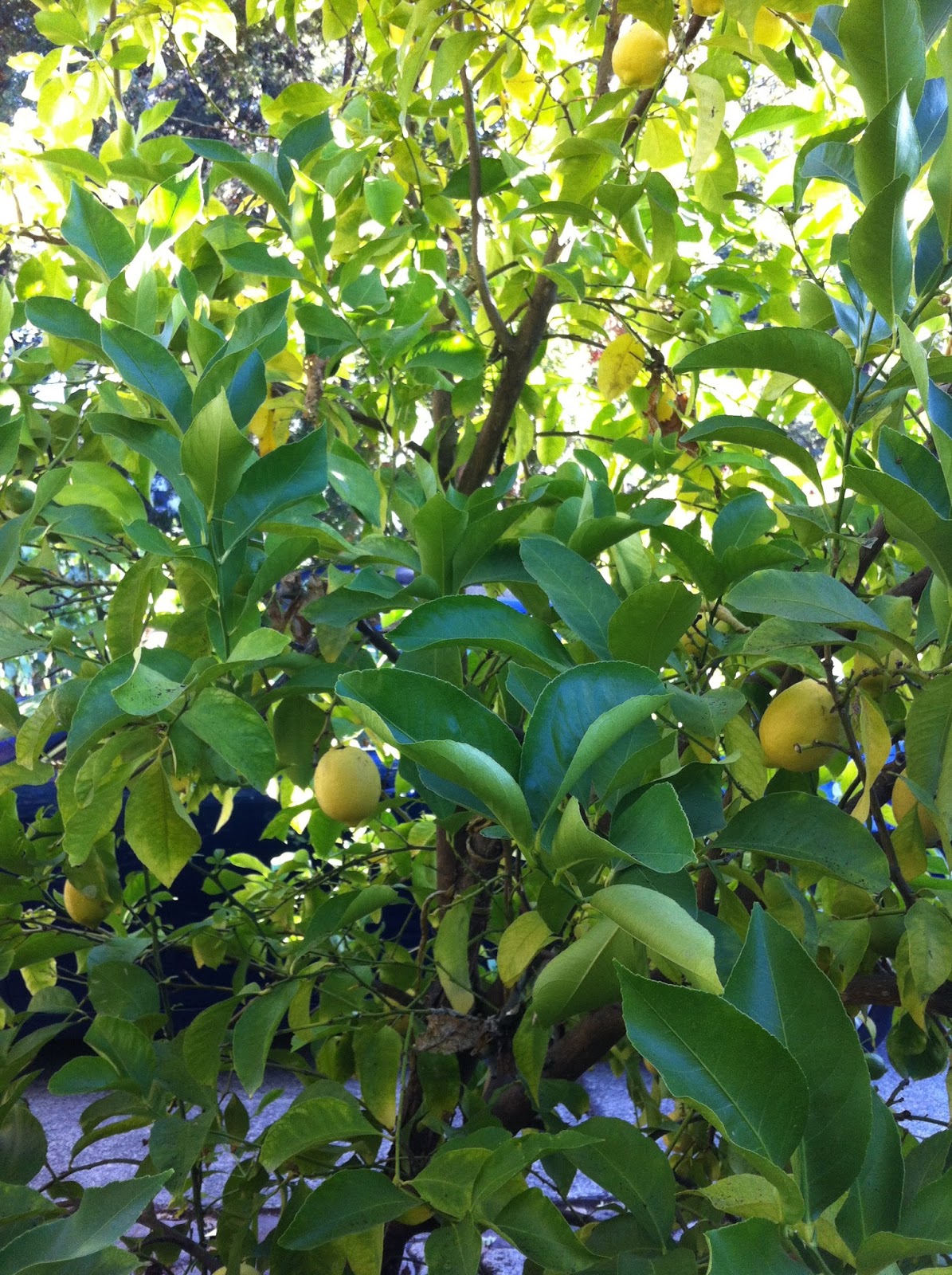
On the final morning as I took my coffee under a pergola and journaled my final observations, an engorged bird hopped by the stone fountain, nudging a grape with its beak. There was a thorny lemon tree, the sun and a clock.

I wrote:

·       I still, will always, have a lot to learn.


·      I might be a loner, but I love being around other writers.

·      Buying more than one raffle ticket will not guarantee you a spot at the coveted instructor dinner.

·      Which writer’s ghost visited me every afternoon and turned on the radio? (no, the alarm was not set.)

·      Californians are cool and I’m pretty sure I could subsist on earthy-crunchy food.

·      I know more than I did last week.

I highly recommend the conference for next year! Have you been to a workshop this summer? If so, tell us all about it.


Friday, August 2, 2013

A review of Jessica Brockmole's Letters From Skye

By Kim,


Synopsis (from the author’s website):

A sweeping story told in letters, spanning two continents and two world wars, Jessica Brockmole’s atmospheric debut novel captures the indelible ways that people fall in love, and celebrates the power of the written word to stir the heart.

March 1912: Twenty-four-year-old Elspeth Dunn, a published poet, has never seen the world beyond her home on Scotland’s remote Isle of Skye. So she is astonished when her first fan letter arrives, from a college student, David Graham, in far-away America. As the two strike up a correspondence—sharing their favorite books, wildest hopes, and deepest secrets—their exchanges blossom into friendship, and eventually into love. But as World War I engulfs Europe and David volunteers as an ambulance driver on the Western front, Elspeth can only wait for him on Skye, hoping he’ll survive.

June 1940: At the start of World War II, Elspeth’s daughter, Margaret, has fallen for a pilot in the Royal Air Force. Her mother warns her against seeking love in wartime, an admonition Margaret doesn’t understand. Then, after a bomb rocks Elspeth’s house, and letters that were hidden in a wall come raining down, Elspeth disappears. Only a single letter remains as a clue to Elspeth’s whereabouts. As Margaret sets out to discover where her mother has gone, she must also face the truth of what happened to her family long ago.

Sparkling with charm and full of captivating period detail, Letters from Skye is a testament to the power of love to overcome great adversity, and marks Jessica Brockmole as a stunning new literary voice.

Photo by Sarah Lyn Acevedo - exposure41
About Jessica Brockmole (from the author’s website):

I have been enamored with historical fiction since I was old enough to sit still for bedtime readings of the Laura Ingalls Wilder books. Now, I write stories of my own (and am much better at sitting still).  When not writing, I can be found reviewing historical fiction as part of the Historical Novels Review's editorial team.  I enjoy getting lost in secondhand book stores and sifting through odd bits of ephemera and calling it "research".  

Review:

I saw this novel mentioned several times on Facebook and preordered it as soon as I watched the book trailer. (Yes, some people watch them.) The purchase was a no-brainer for me. Unusual love story? Check. WWI/WWII era? Check. Scotland? Check. I’ve also read and loved a few epistolary novels.

I devoured this lush novel during every spare moment of my recent vacation, hating to look up and remember I was in Missouri, not on Skye. On several occasions I wondered how Elspeth and Dave could possibly meet, let alone have a happy ending. I read on with bated breath. Every time I thought I had things figured out, I’d find out I was wrong.

This is a beautiful debut, and a must read for all romantics. Letters From Skye is available at bookstores everywhere.
Related Posts Plugin for WordPress, Blogger...