Showing posts with label Oxford. Show all posts

Monday, February 9, 2015

Megan Mayhew Bergman's Almost Famous Women

by Joan

Megan Mayhew Bergman
“I’m interested in anyone’s particular sense of control and autonomy — control over their own life. Traditionally and across many cultures women’s desires and careers often take a back seat to the men in their lives and I’m fascinated by cultures or particular women where this isn’t the case. I respect the difficulty and complexity in stepping outside of those lives. Especially when we’re talking a hundred years ago.” Megan Mayhew Bergman, in an interview with L.A. Review of Books  

Bergman’s Almost Famous Women has earned a starred Kirkus review, impressive reviews from NPR and the New York Times Book Review, and made several "books we're looking forward to" lists.

I pre-ordered Almost Famous Women from Battenkill Books and so received my signed copy on January 7th. Although I wanted to devour the collection in one long sitting, instead I savored the stories over a few weeks. I knew from reading Bergman’s Birds of a Lesser Paradise, that to rush over her words would be akin to dashing through the Met in ten minutes. I’d snatch glimpses of brilliant color and style, but would miss the elegant narrative, subtext and symbolism crafted into each masterpiece. 
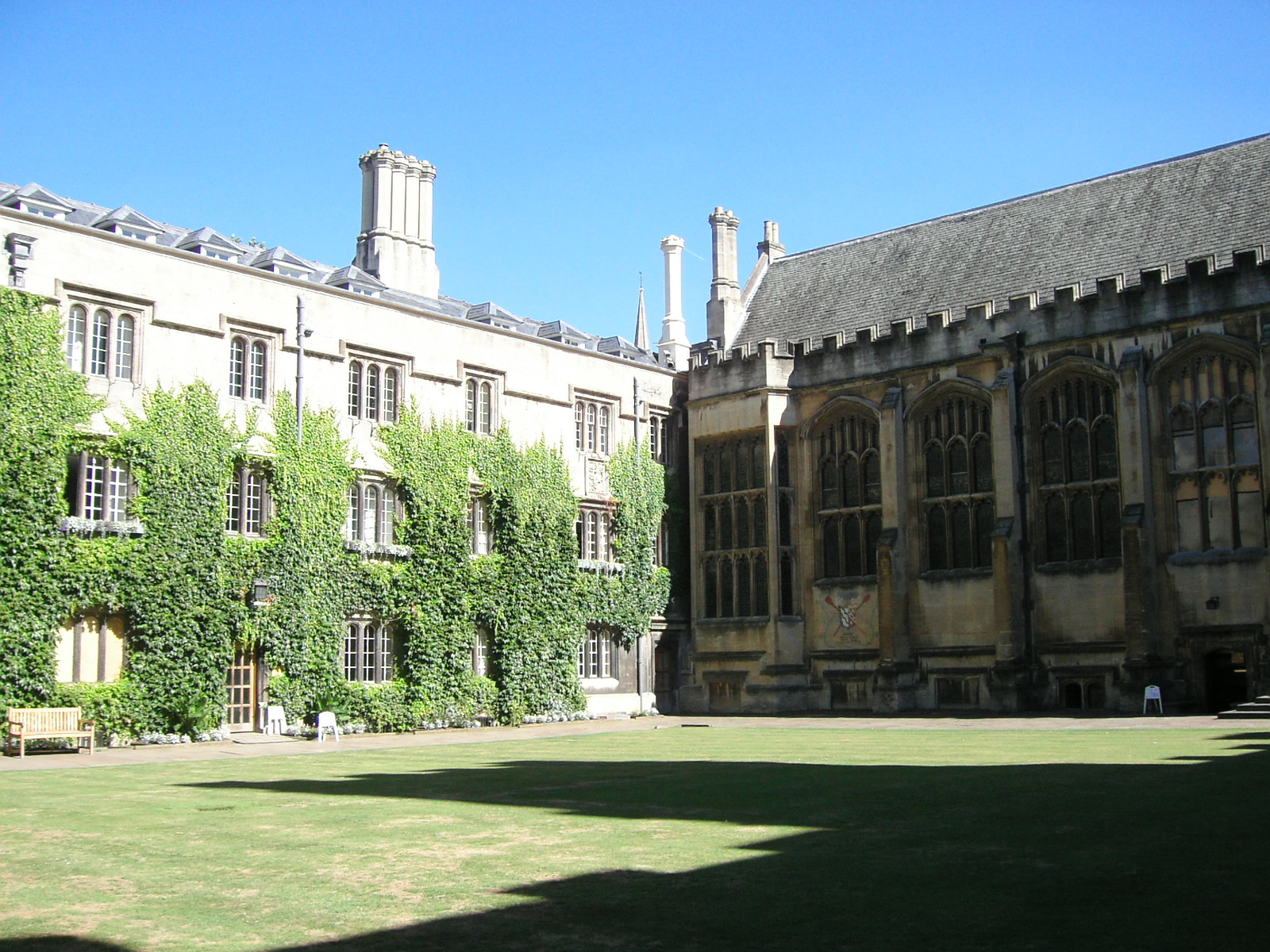
Bergman’s fascination with these women began at an Oxford summer program when she came across a book by Natalie Barney, an American author who held a literary salon in Paris, was a great patron of women’s art and happened to be romantically involved with some of these women. The stories formed in Bergman’s mind over the next ten years of reading and researching.

Inside the lyrical cover are stories “born of a fascination with real women whose remarkable lives were reduced to footnotes.” These women hail from different social classes, races and continents, but they have a few things in common: tragic lives, fierce spirits, and a desire to be seen; though most would greet you with a punch, not a slap, for pitying them.

Many of the stories are narrated by close bystanders: a lover, a caretaker, a friend. This construct prohibits us from understanding the almost famous one’s motivations, but lets us view the tornado in progress—and its inevitable destruction.

In “Romaine’s Remains,” an aged, suffering artist spends her final days under the care of an Italian mama’s boy named Mario. Romaine Brooks is an enigma; she sleeps with her “body curled like a prawn, her head lolled to the side,” and yet she “tries to control the afternoon sun by slapping a yardstick against the blinds.” Romaine is bitter and bedridden. She calls Mario a brute, even though he’s gentle and kind with her, bathing her and carrying her down a flight of stairs on her whim. 

He half wishes she’d die, but then worries he’d have to return to busing tables. Romaine, now nearly blind, has led a daring bohemian life, painting “androgynous women in various brave poses or nude recline,” drinking wine, and living with her lover Natalie in a Tuscan Villa. This last bit Mario learns from snooping at her letters, and he is struck by the idea that he “has never been explicitly himself.” When Romaine confides in him details from her tragic childhood, he imagines she will set him up with an annuity. But she is fickle and “more stubborn than blindness itself.”

“The Autobiography of Allegra Byron” gutted me. Lord Byron’s three-year-old illegitimate, unwanted daughter is sent away to an Italian convent of Capuchin nuns. Despite her tragic circumstances, Allegra is not an easy child to love. She throws tantrums, is spiteful and difficult. A peasant woman who sought refuge in the convent after her own child and husband died of typhus, is the only one who can calm Allegra down. “It had always been my intention at the convent to be nobody, to go unnoticed, to punish myself until I could no longer feel the weight of my dead child in my arms.” When she becomes too close, the grieving woman is warned: “When the children you’ve taught go home, they will hate you as if you’re the one who kept them here.” 

During one of Allegra’s particularly wild tantrums, one nun threatens to call for an exorcism. But Allegra’s new guardian coaxes her into the bath and offers to help her write letters to papa Byron. Both of these lost souls need affection, to be held and soothed. But we learn early, “The convent was not a place of peace.” 

In “A High-Grade Bitch Sits Down for Lunch,” Beryl Markham is broke and alone, “hungry to feel something every day,” even if it’s fear of riding a wild stallion, the “one who’d killed a man with his hooves and teeth in the corner of a stall in Nairobi.” To make her money back, she will ride him. “I will have you, she thought, locking eyes with the regal horse.” When she says, “You will respect me,” it is all of the women in these pages speaking.

In a Rutland Herald interview, Bergman shares what she hopes her daughters will learn from reading this book: "I do hope they have the courage and intellectual curiosity to live a satisfying, full life. … I want my girls to have the option. I don’t want them to feel like a traditional domestic existence is a foregone conclusion. I want them to feel that the world is wide open, that gender roles are fluid and they can chase passions and dreams and professions and they can really be the hero of their own life story."

Monday, January 23, 2012

An International Walk

by Joan

Recently I learned that an acquaintance from my Oxford summer program passed away. Michael (seen here with the lovely Mary-Lucille) wrote spare but spot-on poetry, traveled the UK with gusto, showed complete interest in whoever stood across from him and carried this basket with him always. His wife said he counted his time among us as a high point in his life, and that he had warm and enduring friendships among us.

I also view my time there as a high point, not only because it spawned a manuscript that now lives under my bed and in my heart’s left ventricle, but because I met a truly international group of friends who, each in their own way, adds richness to my memories and my writing self.

Devon, a professor of Irish literature at West Virginia Wesleyan, slipped into the chair next to mine at the first dinner, straight from her cottage on the west coast of Ireland. I knew then that my Maeve Binchy-loving self had found a soul sister. When plans took me to within an hour of her home in WVA, we scheduled a weekend in Shepherdstown, where we roamed quaint streets and talked literature, browsed bookstores and clomped through the cemetery. She also read my then-WIP, The Bodley Girl, and offered invaluable feedback.

The graceful Mary Lucille, posing here with Michael in Exeter’s quad, recently earned a diploma in Creative Writing from Oxford and writes in the vein of Virginia Woolf without being the least bit copy-cattish. She read the British bits of Bodley and advised me on WWII-era fashion and makeup and music. On my next trip to the U.K., I will buy her a spot of tea.

Megan, then a young Duke graduate student with killer writing skills, lodged in the rooms next to mine, and occasionally we'd sneak off to Starbuck’s for real coffee and critique sessions. She was insightful and generous and now, six years later, is on everyone’s watch list for her short story collection, Birds of a Lesser Paradise, which debuts in March. (I pre-ordered from Battenkill Books, an independent bookstore in Vermont.) This is going to be big, people, just wait!

Laura is an absolute sweetheart, a brilliant writer from Mexico living in Amsterdam, publishing books and essays about multicultural issues. Last I heard, she was the Policy Advisor for the International Affairs department of the Dutch Institute for Multicultural Affairs-FORUM. Chance brought us together in New York a few years ago, and we traipsed the streets near Washington Square, stopped in every bookstore and discussed life’s great mysteries.

Naya from Athens got a kick out of my character named Athena in The Cemetery Garden and schooled me on the proper way to pronounce her name: uh-thee-nuh not uh-thee-nuh. She recently stole my dream and moved to London and, after my tea with Mary Lucille, I will storm the Tower of London with Naya.

Shirley travels the world, but I met up with her again in Austin at the Writers League of Texas conference a few years ago. She writes essays on life, which she knows a thing or two about.

Rieko writes exquisite poetry and has contributed to BBC radio programs, both on and off the air. There were times, toward the end of our program, when Rieko and I found ourselves bolting from the Great Hall, up George Street and across Hythe Bridge to avoid a too-often-served dish. It was the first (and last) time I tried green curry, but the joy we found sitting outside with a glass of wine was worth it, made all the more humorous when we looked over to see that Naya, Laura and a few others had the same idea.

There were about sixty of us in total, mentored by professors Jem Poster (brilliant poet and novelist) and Sandie Byrne (leading Austen expert), and many of us keep in touch via Facebook, like Rob and Michelle and Lito and Charles.

The cliché about meeting people in all walks of life is true and I’m thankful I took that walk. And I hope that Michael is someplace warm, with a full basket of pencils and paper.

Monday, March 15, 2010

A Conversation with Melanie Benjamin

By Kim

Those of you who read my last post already know that I’m a huge fan of Melanie Benjamin’s new novel, Alice I Have Been. Just days before that post went public Melanie agreed to be interviewed for What Women Write and I did a little happy dance before combing the internet to make sure I wasn't asking the same questions she has already answered a million times. For the record, no, she is not a lifelong fan of Alice in Wonderland, and no, she does not feel she has a muse of her own (other than her own curiosity).

My fellow blogger, Julie, alerted me about the book several months before the release date. I admit it, I have actually never read Alice in Wonderland, but I was immediately intrigued by the cover and premise of the novel. It never occurred to me before that Alice was anything beyond a figment of Lewis Carroll’s imagination. When I saw the haunting (and mildly disturbing) photograph he took of the very real Alice Liddell, I had to know her story.

From Publisher's Weekly - starred review: Born into a Victorian family of privilege, free-spirited Alice catches the attention of family friend Dodgson [a.k.a. Lewis Carroll] and serves as the muse for both his photography and writing. Their bond, however, is misunderstood by Alice's family, and though she is forced to sever their friendship, she is forever haunted by their connection as her life becomes something of a chain of heartbreaks. As an adult, Alice tries to escape her past, but it is only when she finally embraces it that she truly finds the happiness that eluded her. Focusing on three eras in Alice's life, Benjamin offers a finely wrought portrait of Alice that seamlessly blends fact with fiction. This is book club gold.

Kim: The artist/muse relationship holds great fascination for many people. Was the special connection between Charles Dodgson and Alice the main draw for you, or were you more interested in the story of Alice’s later years?

Melanie: I have to cheat and say both. Obviously we would never know about Alice were it not for Dodgson, and their intriguing relationship really is the heart of Wonderland; it’s hard to separate the two. But the idea of following Alice throughout her long, fascinating life is what induced me to write the book, for that’s the story that hasn’t been told before.

Kim: I have to admit that I opened your book with a slight bit of trepidation, fearing I may have difficulty reading about a close bond between seven-year-old Alice and a grown man. I was surprised to see in one of your interviews that the early part of the book was the easiest for you to compose. How did you handle writing about the creepier elements of their relationship?

Melanie: It was easiest to write because there’s so much known/not known about it; it’s the intrigue that fascinates me as a writer and fuels my imagination. I never once saw the relationship, through the eyes of either character, as creepy; I saw it as tragic. I suppose that’s what made it palatable for me to write it. I realize – and understood, always – that modern eyes, reading it, might be uncomfortable. But I could never allow my own modern sensibility to impart any kind of judgment on either of their actions; that would not have been true to their characters.

Kim: This could explain why I found myself hoping that they would actually end up together when she was grown. I personally saw her as a very old soul and him as oddly childlike, but I could see how people today may be quick to label Alice a victim or Charles Dodgson (Lewis Carroll) a pedophile. I take it you do not see them that way?

Melanie: No, the truth, I firmly believe, was much more complex than that. I really have come to see their relationship as tragic; two very lonely people who wanted to comfort each other, meeting at the wrong time in both of their lives.

Kim: I’ve never been to Oxford, but I have spent some time in England. I was amazed at how well you captured the feel of both the time and the place. How did you prepare to write about a place you’ve never been?

Melanie: I gave my imagination free rein. Based on research, of course, and there was a lovely site called Virtual Oxford that allows you to see the town, the college, through web cameras. But of course, then I had to go back and determine what would not have been there one hundred and fifty years ago! But once I established some sense of the place in my mind, I then allowed myself, somehow, to “go” there, and see it through Alice’s eyes at the different times in her life, imagine what she would have felt, touched, sensed, etc. It’s strange and almost mystical, in a way, and I can’t really explain it better than that.

Kim: Alice I Have Been is your first attempt at historical fiction. How did you approach writing it?

Melanie: By concentrating on the characters and the story first. I didn’t write it because I was intrigued by the period (although I am drawn to the Victorian era; my shelves are full of books about it). I wrote it because I was drawn to the characters and the story, so the setting, while vital, is not the most important element. Perhaps other historical fiction writers approach their novels differently, but for me it’s story and characters first, setting later.

Kim: Did you do all your research before starting the book or was the research ongoing?

Melanie: I thought – and I suspect most historical novelists think this – I had done the bulk of it before writing, but with historical fiction, you never know. You can be chugging along, writing, and all of a sudden you need to know something; was there a railroad station in this town in 1862? Were gaslights installed yet? That sort of detail you might not know you need until you get into the body of the manuscript. So it’s always a balancing act; you can’t get down on yourself if you do, unexpectedly, spend a day researching instead of writing, as long as it’s necessary. It’s still work. The challenge is not getting too swept up in unnecessary research and using that as an excuse not to write. As I said, it’s a balancing act!

Kim: As a fellow historical fiction writer, I relate. I've read that Alice I Have Been is not actually your first book, that you (as Melanie Hauser) previously wrote contemporary fiction. Do you see yourself ever going back to that, or will you continue with historical from now on?

Melanie: I have no plans to revisit the type of book I’d published before. I think I finally found my true calling, as I’ve long been a history nut, and my shelves are just packed with histories, biographies, etc. It’s as if I really have been training to do this my entire life; I just had a minor detour along the way!

Kim: What do you think may be the appeal of historical fiction to readers today?

Melanie: I’ve heard from a lot of readers that they enjoy feeling as if they’re learning something as well as being entertained. It’s almost as if there’s a certain guilt attached to relaxing and reading a novel, and the guilt is lessened if the reader feels as if he’s learning something new. I don’t think most readers confuse fiction with non-fiction; they’re smart enough to know that novels aren’t history books. But a lot of readers use that historical novel as a jumping off point to do a little bit of research on their own about a certain subject or person. And I think people enjoy being intrigued enough to do that.

Kim: What time periods most fascinate you and why?

Melanie: Pretty much everything from the early Victorian era (1830’s) to the 1950’s. Those are the eras that fascinate me, and again – my bookshelves are stocked with novels and histories written in and of those time periods. I’m not sure I can articulate the “why;” I think people are just naturally drawn to certain eras.

Kim: What can you tell us about your next project?

Melanie: It’s another historical novel, a “story behind the story” but this time it’s a uniquely American story. It’s set roughly in the same time period as ALICE I HAVE BEEN, but that’s the only similarity. Other than the protagonist is an amazing female you’ve heard too little about!

Kim: Many of our readers are aspiring writers seeking publication. Do you have any words of wisdom you can share with us?

Melanie: It’s a never ending journey. There is rejection at every step; there’s really never one moment where you can say, “At last, I have arrived!” We all have to learn to juggle many different roles; we have to be an artist and love the creative process but then we have to learn to let our work go, and understand that everyone else will look at it as a product that needs to be bought and sold. But in the end, there’s no more rewarding job than being a writer; I’m my own boss, and I have the privilege of living in different worlds, becoming different people, every day. I suppose the most important thing I’ve learned is that the successful author is the author who learns to move forward, always; to reinvent herself, if necessary. But who never loses her love of language and storytelling.

Kim: Thank you so much for joining us today, Melanie. Alice I Have Been can be purchased in bookstores everywhere and here.


Related Posts Plugin for WordPress, Blogger...