Showing posts with label Stephanie Cowell. Show all posts

Friday, March 6, 2015

Snowmaggedon, Bipolar Weather, and Our Productivity

Photo by Deborah Downes / Take to Heart Images
By Kim

If you are anything like me, weather has a great deal of impact on your mood and productivity. While we have not had the snow our friends in the northeast have experienced, the winter of 2015 here in Dallas would best be classified as bipolar. One day it is 70 degrees and the next we have freezing rain. We had four inches of snow last night and now it is nearly all gone. We’ve gone through long stretches without seeing the sun. The constant state of flux has made it hard for me to focus. Even tasks like writing this post seem too daunting to manage.

So I’m letting other people write it.

I reached out to several of my writer friends, asking them what the weather has been like in their neck of the woods, and how it has helped or hurt the number of words that make it to the page. Some of their ideas about how to keep or reclaim focus may be of help to some of you (like me) who are still struggling. Here is what they had to say:


“I am a summer person, and am more productive when the weather is sunnier and hotter. Here on the West Coast it has been a particularly foggy and wet winter. The fog really drags me down, and productivity in all areas flags. I’ve been using my light box more this winter.”
Brin Jackson – Fantasy writer


Photo by Deborah Downes / Take to Heart Images
“New York City's very trying, cold, icy winter has made me want to run away inside my novel and find a nicer world. I wrote one scene describing such sweet spring weather, and was quite astonished to find myself still struggling over dirty mountains of old snow outside. Which shows my creative worlds are more real to me at times than the one I live in every day! I wrote cherry blossoms and really expected them to appear!”
Stephanie Cowell – author of Claude and Camille


“Maryland has had pretty gloomy weather for the last 3 months--lots of rain, ice, wintry mix; very little sunshine. I normally love winter and find grey days excellent for concentration, but lately have been finding it hard to keep working. The desire to pamper myself--perhaps comfort is a better word--gets stronger with every dismal day. If it just snowed, I'd be a lot happier! (I used to live in Massachusetts and miss the snow's clean lines, the blue light at dawn and dusk.)”
Barbara Morrison – author of Innocent: Confessions of a Welfare Mother


“I’m hesitant to blame my lack of writing progress on the weather, but February here in southern Ontario has been downright nasty. We had stints of wicked cold (-20 to -30, for those of us who speak only Celsius… to put that in perspective, that feeling when you go outside and your forehead kind of aches from the cold is around -15) followed by slight warming, but the slight warming was always accompanied by giant dumps of snow. There are mountains of shoveled snow acting like blinders alongside my driveway; backing onto the street means taking a deep breath, hoping for the best and gunning it. I don’t think we saw an above-freezing temperature all month. I mostly gave up on running outside. 

Photo by Deborah Downes - Take to Heart Images
So yes—it’s been more a month of going mad than of writing like mad. You’d think that, stranded indoors, I’d find lots of time for writing. Not so, and I’m not sure why. I was frustrated with my project, feeling like I couldn’t get anywhere. To be honest, I put it aside. Not in a mature, considered way, either. If my story were a person, I’d have shoved her into the ditch with all the self-restraint of a tantrummy three-year-old. I wiped my hands clean and walked away. 

But oddly, just as the past few days have gotten brighter and it’s starting to feel like there might possibly be an end to this winter, I’m feeling hopeful about my writing again, too. My writing group meetings have helped, even when I didn’t want to go and had to force myself out the door. It was good to see friends, especially friends who have struggled with their writing, too. The workshop I attended recently also helped—I’d almost forgotten about it, and grumbled when it popped up on my calendar, but hearing about someone else’s approach to story helped unlock my rusty brain-cogs and start things spinning again. 

I don’t know how it’s going to go, but the snowdrifts are shrinking, and I’m easing back into writing and back into the world.”
Erin Thomas – author of Forcing the Ace


“February in the Mighty Mitten was cold and snowy. The temperature never rose above freezing once, was below zero about a dozen times, and topped out in the single digits or teens more than half the days of the month. We had about a half-dozen major snow events (more than four inches) in February, but on well over half the days of the month we received dustings and/or snow flurries. Total snowfall for this area for the year is around 70 inches. Unlike the Northeast, this has been a fairly typical winter, here along the Lake Michigan shoreline. And it’s been beautiful!

As is typical for me, the winter months are more productive, writing wise. I finished a draft of a major rewrite of a manuscript in February, after struggling with it over the holidays. The manuscript was a total rewrite (in other words, I did not reuse any old material), as near as I can calculate (based on where I think I was on Feb. 1), I wrote around 55K of new words, plus assorted essays, etc. The final few days of the month were spent in a pass-through edit of the project (in which I’m still engaged).

I’ve always loved reading or writing in inclement weather. There is a coziness and a feeling of solitude, and perhaps a bit of melancholy, that all suits my fiction, and leads me to hunker down and disappear into the process. There is a lovely quietude that comes with the snow. It’s so still out there. I’m cushioned in sweaters and thick socks and slippers, with a hot coffee cup to warm my hands. Immersion is easier. I look out at the swirling snowflakes, and the green pines and gray beech trunks, and I’m off to Dania.”
 Vaughn Roycroft – epic fantasy writer


Photo by Deborah Downes - Take to Heart Images
“So. The weather here has been wonderful, if you are a fan of Frosty the Snowman, who has decided to move in permanently. My youngest has had 7 snow days and at least one delay, followed by a week of vacation. Not much writing is happening. On the other hand, he's growing so fast he's only about 6 inches shorter than me now, and in a few years snow days will mean sleeping late or hanging with his friends instead of sledding with me, so I'm still pretty grateful for the extra time.”
Liz Michalski – author of Evenfall


“I spent almost the entire month of February sick, and did little to progress my actual book. It also meant I had too much time to doubt my current book, to dither between projects, and doubt every word I've ever written. It's been a rough winter. My husband has talked about getting me one of the light boxes Brin mentioned.

Keeping a journal pulled me through the worst of the doubt, though I'm still muddling through questions about what I should be writing. I did a lot of stream of conscious writing and surprised myself with a few revelations about my process and what was in my *colander*.

Meditation also helps me get through the worst of the weather. I am a much better person (and less grumpy mom) when I take the time to just *be*. But, like writing, it's a practice. Some sessions are better than others.

We have almost two feet of snow where I live in south-central Illinois, as well as below zero temps. I live in a rural area where many people reside in the country and have been snowed in. I have an elderly great aunt I've been taking medicine to.”
Tonia Marie Harris – writer of YA speculative fiction


Photo by Deborah Downes - Take to Heart Images
“Winter is the time I do most of my writing, because in the warmer months I want to be outside. And this has definitely happened this winter, because I have been trapped indoors with the never-ending snow. *sobbing* And although, like Liz, my kids have had 8 days off from school followed by a vacation, I've still managed to get a good number of words on the page, and even better, I've been happy with most of what I've written.”
Jeannine Walls Thibodeau – freelance editor/proofreader and writer


“Growing up in an area with sunshine 350 days out of the year left me with reverse seasonal affective disorder. I need the change of seasons both for clear thinking and focus. I do work differently in warm weather vs. cold—outside by the harbor during the summer months and at my desktop during the winter. Venue doesn't seem to affect productivity.

That said, we just came off the snowiest month on record, and I've had trouble concentrating. Not because of the gloomy weather, but because of claustrophobia. I live on the ground floor and the snow is piled so high around my building, when I look outside, all that is visible are walls of white.”
VR Barkowksi – author of A Twist of Hate


"Here in the Florida panhandle, our winters are quite mild, with about a cumulative week's worth of cold in the 20's scattered throughout February. There really is no big change in seasons...the leaves drop and the grass browns, things become dormant, but that's about it. I usually have a lot of yard maintenance in the winter, because once everything comes back to life, it comes back in full-force. Since the days are short, I do my writing at night during the winter. During the summer, of course it's tough to keep on top of the growth (especially if you didn't do winter maintenance), but since the days are so hot, I only work in the yard in the early morning or late evenings and write during mid-day. So, seasons do alter my writing habits--at least the time of day that I write."
M.L. Swift – writer of “unboxed” stories that don’t fit neatly into a genre.


"I am more productive in the winter. I posted on my blog about this topic. When the weather is inclement (I live in Connecticut) I find myself indoors more and it is much easier to write. In the summer there are too many competing distractions. I love the beach and I like to be outdoors in the summer. I suppose that's no excuse because one can always bring a laptop or tablet and write outdoors."

C.G. Blake – author of Small Change


So, what's the weather been like in your neck of the woods? How has it affected your productivity? If it inspires you, why? If it does the opposite, how have you been able to reclaim your lost focus?

Monday, July 8, 2013

Writing tips and links

by Joan

Breaking into the writing world can be scary and overwhelming. Though we're all at different stages in our careers, we’ve been at this for a while and take for granted all we’ve learned over the past ten years (or so). When recent blog guest Chris Raia expressed an interest in writing tips and links, it occurred to me that others might appreciate a go-to list as well.

Workshops and conferences are a great way to learn your craft and meet writers in all stages of their careers. Where would I be without the wonderful friends and acquaintances I’ve met outside of my little writing space? I've learned from incredible instructors and classmates at the Bethesda Writers' Center, the Writers' League of Texas and will soon attend a weeklong fiction workshop at the Napa Valley Writer's Conference.

A crucial part of improving your work is to show your words to one or more trusted readers. Over the years, I’ve worked with both good and bad, so choose your critique partners wisely. Here are a few thoughts on finding the right group and making the most of it when you do. 
Writers’ Digest also has a critique forum. 

Once you’ve revised and edited your work, whether it’s a short story, children’s book or novel-length manuscript, you might consider entering a contest or submitting to a literary journal. 

Another great resource for advice and camaraderie are writers’ blogs. Here are a few of our favorites:


Brian Klems' The Writer's Dig


And of course, our own... What Women Write

Looking for deep, self-instruction? Here are some books on writing:


Susan is the master of revision and recently shared some great advice. But perhaps you're looking for professional help in the form of an editor? Here are a few options:

Heather Webb, author of the upcoming Becoming Josephine
Stephanie Cowell, author of Claude & Camille: A Novel of Monet
Grub Street, offering workshops, consulting and conferences

Even though there are many online resources, I'm still a fan of magazines. I get Poet's and Writers and Writer's Digest; Pamela subscribes to The Writer.

Perhaps you want to pursue an MFA. (This one’s still on my goal list!) Here’s a list of MFA programs you might want to consider.

When you’re sure your work is in the best possible shape, and you want to get it published, you’re ready to hire an agent or see if one represents your genre. If you want to learn if the agent you’ve chosen is respected and successful, Preditors and Editors is a great site to research. Or if you just want the scoop on what writers have experienced, Absolute Write forums cover almost any writing related subject. 

If you're an experienced writer or author and have more to share, please do!


Wednesday, June 12, 2013

A Review of Maryann O'Hara's Cascade

By Kim


Cascade synopsis (from the novel’s goodreads profile):

It’s 1935, and Desdemona Hart Spaulding has sacrificed her plans to work as an artist in New York to care for her bankrupt, ailing father in Cascade, Massachusetts. When he dies, Dez finds herself caught in a marriage of convenience, bound to the promise she made to save her father’s Shakespeare Theater, even as her town may be flooded to create a reservoir for Boston. When she falls for artist Jacob Solomon, she sees a chance to escape and realize her New York ambitions, but is it morally possible to set herself free?

Fans of Richard Russo, Amor Towles, Sebastian Barry, and Paula McLain will savor this transporting novel about the eternal tug between our duties and our desires, set in New York City and New England during the uncertain, tumultuous 1930s.

About Maryann O’Hara (adapted from the author’s goodreads profile):

Photo by Joanne Smith
Maryann O’Hara was the longtime associate fiction editor at Ploughshares, Boston’s award-winning literary journal. Her short fiction has been published in The North American Review, Five Points, Redbook, The Crescent Review, and these anthologies: MicroFiction, Brevity and Echo, The Art of Friction, Sudden Flash Youth, and Fictionality/Reality/ Possibility. She is grateful for grants she received from the St. Botolph Foundation and the Massachusetts Cultural Council, and to the editors who nominated her stories for Pushcart Prizes. Her story collection was a finalist for 2010’s Flannery O'Connor Award for Short Fiction.

My Review:

Anytime my friend Stephanie Cowell recommends a book to me, I buy it at once and put it at the top of my To-Be-Read pile. In the case of Cascade, there were several other things that prompted me to not only buy the book, but set aside the one I was currently reading and dig in at once. I love the time period, that the protagonist is a woman artist who has another artist as her muse, and was fascinated by the premise of a town being destroyed in such a way.

O’Hara’s descriptions of the artistic process were fantastic (and led me to make a few tweaks in my own manuscript.) Though the protagonist, Dez, is unfaithful to her husband, a successful, handsome, and a supportive man who loves her, the author skillfully keeps her not only likeable but utterly sympathetic. I ached both for her plight and for the fate of Cascade.  

An appreciation for art would be helpful, but is not essential, for enjoying this novel. I would consider it a must read for art lovers or those who are curious about towns that have been demolished in the name of progress.

Friday, April 12, 2013

Literary Crushes


By Kim

As an avid reader from the age of three and a sucker for a good love story, I confess I’ve fallen in love with more fictional men than real ones in my lifetime. Most are transitory infatuations that last only as long as it takes for me to finish a novel or until they do or say something that annoys me, whichever comes first. I don’t remember their names a month later.

Some remain with me, luring me back to their pages so I can again experience that heady rush. I don’t always get it. At nineteen, I loved Emily Bronte’s Heathcliff. Twenty years later, I wonder why. My opinion about Diana Gabaldon’s Jamie Fraser has not changed since 1992, however. I’m sure I’ll feel much the same about Cathy Marie Buchanan’s Tom Cole and Stephanie Cowell’s imagined version of Claude Monet.

I met my first literary love at twelve, when my mother gave me my first copy of Jane Eyre. Ever since, Edward Rochester is like the bad boy ex-boyfriend I’d take back in a heartbeat, damn the consequences. I forgive him the moodiness, the mind games, and even the mad wife imprisoned in the attic. Each time a movie version comes out, I’m at the theater and praying that the actor in that role fits the image in my mind. He never does, though Toby Stephens was my favorite.

My eldest daughter is now almost twelve and she, too, has fallen in love for the first time. The object of her affection: Peeta Mellark from The Hunger Games. As soon as she finished book three, she immediately picked up book one again, so she could have “her” Peeta back the way she wants to remember him.

How about you? Who are your literary crushes?

Monday, March 11, 2013

Setting the stage


by Joan

When we moved from Maryland to Texas almost eight years ago, we purged fifteen years of accumulated “stuff,” gave mountains of action figures and clothes to younger neighborhood boys, and sold or donated most of our furniture. Texas would be a new start with a new style. In Dallas, we found a few go-to furniture stores, ogled in others for ideas, installed window treatments, hung art and accessorized with vases and pillows. We made space for trinkets we'd picked up in our travels, a salmon-eating wooden bear from Alaska, an ancient Greek urn, a Turkish clay bottle and lots of pictures. Within a year we sat back and admired our eclectic choices.

Now as empty nesters we find it’s time to move again. "Rightsizing" the realtor called it. She sent a complimentary interior designer to stage our house for showing. For years I thought our house was well decorated, stylish even, but soon it became apparent I was a hack wannabe.

I heard, “This fabric doesn’t go with that painting,” and “No, these must go,” about my attempt at a silk flower design. Even my husband chimed in. “Yeah, she has many talents, but decorating isn’t one of them.” When we got to the guest sink, separate from the Jack-n-Jill, the designer picked up a small bowl of fake lemons and limes. “Oh, no no no. No fruit in the bathroom.” I felt crushed. Embarrassed. I had no style. Worse, I didn’t know I had no style.

She went on to point out the things we’d done right. “Let a buyer see the lovely floor plan, the potential for what they could do with it." We made a list of furniture to remove or relocate, accessories to pack away to make the rooms look as inviting as possible. I didn’t see the house as cluttered because I liked every trinket and knick-knack in it. They were my darlings.

After several agents rejected my full manuscript over the past year, I began to think I had no writing style. Maybe I was just a hack wannabe and nobody had the nerve to tell me. Since my partials were turning into full requests, I knew that couldn’t be exactly true. But I also knew there was something wrong. Why weren’t the fulls turning into offers of representation?

I needed professional help. I hired Stephanie Cowell, author of the beautiful Claude & Camille, as an advisory editor. Like my house stager, Stephanie pointed out plot clutter, sidetrack plotlines or details that got in the way of the main story. Just as I hadn’t seen my house clutter, I couldn’t see clutter in my manuscript because I liked everything in it.

Stephanie's detailed notes delivered exactly what I needed to hear. She captured the essence of my manuscript, pointed out not only what was working or not, but also the "why" of it. She gave me specific examples of chapters or scenes that needed clarification or grounding. She validated my characters, not by offering vague praise, but by pointing out what captured her heart. I will be forever grateful!

I would highly recommend her editing skills to writers seeking an objective, insightful look at their work. Thanks to her keen eye and close review, several agents are now reading my manuscript.

Next weekend I will deliver my house to another type of agent. And hope the offers pour in. 


Monday, April 23, 2012

Six Authors Share What Inspired Their Novels

By Kim

Those of you who have been following What Women Write know that I recently finished The Oak Lovers, a novel based on the lives of my great-grandparents. Unless you’ve been stopping by since 2009, you may not know what compelled me to write their story.

My favorite childhood stories all involved a colorful character named Carl Ahrens. I adored the outrageous tales about young Carl running away from home to live with the Indians, befriending Calamity Jane, or making a catastrophic attempt to fly off the barn roof. He was a cowboy in pioneer Montana one night and the next he traveled the California coast by covered wagon.

Though I knew Carl was my ancestor, it wasn’t until I was much older that I associated the adventurer with the frail old man in the family photographs. How could a man who suffered from a crippling form of tuberculosis have had all those adventures? What about the woman beside him in the photos, the one who kept a comforting (or perhaps possessive) hand on his arm? He gazed at her instead of the camera, a look of naked adoration on his face. What was their story? I had to know it and, once I did, I had to tell it.

Many writers claim they had to write a particular book, but the reasons behind the need vary greatly. Today, authors Therese Walsh, Stephanie Cowell, Kathryn Magendie, Cathy Marie Buchanan, Judy Merrill Larsen and Erika Robuck join us and share their inspirations.

Therese Walsh – The Last Will of Moira Leahy 

There are so many layers to this question, and it might be answered in as many ways. At a base level, I think I was compelled to write because I sought professional gratification. I'd left a career as a researcher and writer for Rodale Press to become a stay-at-home mom. I had no regrets--not a single one--however I missed the world of more cerebral work. This persisted even after I began freelance writing from home, because that didn't satisfy my need to evolve as a writer. Once I hit on fiction--trying my hand at some children's picture book concepts before deciding to write a work for adults--the bug bit hard. My reasons for writing evolved then, became partly about recovering from the death of my father and other real-life events. But at root, I think I simply needed to feel like a relevant professional with something to say, and with the skill to say it.

Stephanie Cowell – Claude and Camille 

I was so passionately interested in writing Claude & Camille because most of my friends have been in the arts and, like the young Claude Monet, most of them have had a hard time managing their art and the needs of a normal life. Since the arts often bring little money, how do you pay the rent? And if the writer or singer or painter has a day job, she must fit her painting or writing in the evenings and weekends. She is constantly saying, “I can’t do any of these lovely social things because evenings and weekends are my time to…” It can be a real tension in a relationship; it can cause marriages to fail. If you are devoted to an art it takes an awful lot of time and money. So the story was dear to me because I lived it and many of my friends lived it. Claude & Camille is a bittersweet story because by the time Claude Monet had succeeded as an artist, he had lost Camille. I wanted to ask, “What is art worth? What was the cost of the beautiful water lily paintings?” It has no easy answer.

Kathryn Magendie - Sweetie 

While letting my first book (Tender Graces) simmer before chopping it to pieces (laughing), I wanted to see if I could write a draft of a novel in 30 days—not for nanowrimo, for at the time I’d not heard of it; I just wanted to see if I could discipline myself to the task. I started with a vague notion of a “special” girl who has scars on her body and lives in a small mountain. In the back of my mind was an article I’d read in Reader’s Digest magazine about a little girl who had a congenital insensitivity to pain, and how her mother had to watch over her so very carefully. Well, I wondered, what would happen if the mother couldn’t watch over the little girl? And what if this was during a time, and in a place, where this wasn’t a known condition? What if the girl and the town thought she was afflicted or cursed? I began writing: tippity-tap-tip-tap—wheee!

There I was la tee dah’ing away on a story-path and then one day during a walk in the forest on my mountain cove here in the Smoky Mountains, Sweetie “came to me.” She was so real in her faded cotton dress. She told me I had it all wrong—had her all wrong. I’ve never had this kind of experience with a character before. I may never have it again. And whenever I’d stray, she poked me until I had it “right.” Sweetie also affected the ending, which I angsted over so very much until I finally let it “go” and knew it was the only ending that could “be”—period.

Sweetie remains one of the most special of my books because of this feeling of something outside of me that can’t be explained. I had to write her, and I had to write her as “Sweetie” wanted me to. She, and I, could not rest until that was done. I have never seen her or felt her since finishing the book. I miss her but I’m glad she’s happy.

Cathy Marie Buchanan – The Day the Falls Stood Still 

When I set out to write The Day the Falls Stood Still, the story of William Red Hill, Niagara’s most famous riverman, was a natural place to find inspiration. Born and bred in Niagara Falls, Ontario, I grew up awash in the lore of Red Hill. I’d see the rusted-out hull of the old scow lodged in the upper rapids of the river and be reminded of him rescuing the men marooned there in 1918. I’d see the plaque commemorating the ice bridge tragedy of 1912 and know he’d risked his life to save a teenage boy named Ignatius Roth. I’d open the newspaper and read a story about his son, Wes, carrying on the Hill tradition and rescuing a stranded tourist. The hero of my story, I decided, would be loosely based on Red Hill. In creating a riverman with an extraordinary—perhaps even mystical—ability to predict the erratic behavior of the Niagara river and falls, I saw a chance to showcase the wonder I feel when I stand at the brink of the Niagara Falls.

Judy Merrill Larsen – All the Numbers

With All the Numbers, as well as manuscripts I've completed since, I've found that the story itself nags at me until I can't NOT write it. A scene will come to me--or several scenes, and I know that I have to dig deeper, I want to know what happens, I have to listen to these characters and help them get from point A to point Q or R or wherever they need to be. I suppose that all sounds very vague or all "whoo-wooey," but it's how it's worked for me.

Erika Robuck – Hemingway’s Girl (coming September 4, 2012)

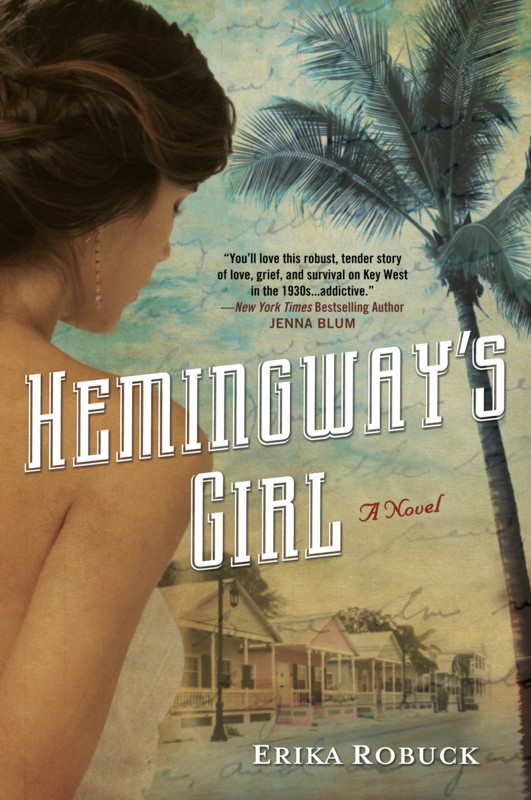
I hesitate mentioning this in mixed company, but what compelled me to write my novel, Hemingway's Girl, was a dream. I had visited the Hemingway House in Key West and felt an intense connection to my surroundings while I was there, but I was working on another novel. Not long after my visit, however, I had a dream where I was sitting with a young Hemingway in the Key West house, and he asked me to write about him because he’d become irrelevant. The next morning I shelved my other project and began Hemingway's Girl. The rest, as they say, is history.
Related Posts Plugin for WordPress, Blogger...