Showing posts with label Julie Kibler. Show all posts

Wednesday, April 29, 2015

Today We Say Farewell


Six years ago we started this blog as a way to share our writing journeys with others. Armed with humor, anguish and a lot of hope, we’ve posted numerous essays on craft and the publishing business, interviewed countless rock-star authors, and visited with editors and agents. Developing and thriving in this community has been so rewarding and we have each grown as writers and humans, developed life-long relationships amongst ourselves and with others we’ve met along the way.

We are not alone in finding the commitment of regular blogging as both a reward and hindrance to our real writing time. We are primarily novelists here – published and as-yet. And as with many time commitments, we had to weigh the joys of writing for this blog and (hopefully) helping others as we’ve been helped along the way. 

We’re sad to say goodbye to this page, but we are not saying goodbye to each other, our critiques, our community, definitely not our annual retreats.

We are ever grateful for your reading our words, for sharing your stories and comments, for traveling with us as we celebrated the joys of personal and professional milestones, comforted us in our rejections and tragedies.

Our posts will be there for you to peruse – a list of authors we’ve interviewed is on the right panel. And if you want to see what we’re up to, please visit us on our individual websites or pages. (links below)


Elizabeth Lynd


Farewell, all.

Friday, February 27, 2015

Found Objects

By Julie

I've wondered if other writers take as much pleasure as I do in a certain part of the research I undertake while writing a manuscript. I'll go ahead and call it found objects. These are objects that inspire, reinforce, enhance, and commemorate my writing.

Sometimes they're items I come across accidentally--or maybe serendipitously--that don't serve any real purpose other than reminding me of the work I'm doing. In this category is an infuser mug I bought at World Market when I was writing a story with a character who was a Japanese war bride, pictured here (the green one with the red lid).

After I bought it, I intentionally looked for items to represent each of my main characters in that novel, intending to keep them on my writing desk to help me stay on task. Too bad I didn't finish that novel, but it was fun finding the objects and displaying them for a while. Maybe the characters will make their ways into other stories eventually, and the energy and money I spent won't have been wasted. Another of those objects was an early 20th century era Catholic prayer booklet for mothers, which I found on eBay along with a vintage rosary. I was fascinated to discover carefully cut out flower art and a lace bookmark inside the booklet, as well as hand-marked spaces for someone to personalize it. I wondered who did that. Maybe it was simply an unused gift. But maybe someone started it for herself, then never finished it. A lost baby? Who knows, but my imagination was off and running.

Some of our readers might remember when I did a giveaway before Calling Me Home released of a necklace I found on Etsy. I couldn't believe my eyes when I saw how perfect each of the items attached to the necklace was in telling the story I'd written in a nutshell.

I'm working on a new story right now, one I'm very excited about, and feeling more confident than I have in ages that it could be the "right" one. (How many times have you heard me say that now? But seriously, I'm all about writing the "right" story, so I'll keep hammering away until it happens.) I've been doing research until my eyes cross. I've read everything I can get my hands on about the topics contained within. I've written pages I'm pleased with, and pages I've deleted in disgust.

In the process, one of those "found objects" appeared this week. I confess my heart rate sped up a bit as I opened the package that came Thursday afternoon, a few days earlier than expected. Inside was a book I'd ordered, carefully wrapped in brown paper. A book published in 1931 -- a first edition, no less. I crossed my fingers it wouldn't smell too much of mold, as so many of my old books do. It was in good condition for being almost a century old, and I was thrilled to open the pages and find not only text, but slick pages with photos. A book that tells much more of the story I'm researching than I could ever find online or at any library in the area. Not only that, but it was the only copy I found for sale anywhere. One copy. I have to assume it was out there waiting. :)

I turned to the first page and began reading, and the sense I had of actually holding history in my hands was different than anything I've experienced yet while working on this story. I can't tell you more about it right now, but today, I feel very lucky about this "found object."


What about you? Share with us in the comments about "found objects" you have come across that have enhanced your writing or reading.


Monday, February 23, 2015

Weather as a character

by Joan

As I write this, ice taps the windows and wind batters the chimney cap. I’ve just come in from helping my husband raise the exterior shades on the two-story window and my fingers are still numb. A snowflake icon shows up on my weather.com app for tomorrow (or today, as you are reading). No, I’m not in the northeast; I’m in Dallas, where last week it was 75 degrees.

Maryland house, 1991 - 1999
For forty-five winters in Maryland, there was a particular dread I’d feel going into November, knowing that I wouldn’t be warm again until mid March. The jewel-toned October trees would strip naked and stand brittle and grey. The sun would slink away earlier and earlier, sometimes not showing up at all. I shivered constantly, no matter how many sweaters I crawled into. Some years were worse than others, but in my memory the winter scene looks just as it does now: temps in the teens, imminent or piled-up snow, wind that whips chill into your bones. 

Elmore Leonard said, “Never open a book with the weather.” But what if your book features haunting, beating, relentless weather. The problem with writing advice, particularly when it involves the word “never,” is that there are brilliant stories that defy the rules. Beautiful prose, tension, engaging characters; these are the elements which lure readers into a story.  

Kim just reviewed Nancy Pickard’s The Virgin of Small Plains, which takes place during a deadly Kansas blizzard. A while back, Julie reviewed Ann Weisgarber’s The Promise, set in Galveston, Texas, in the weeks leading up to the devastating 1900 hurricane. In Weisgarber's novel, a scandalized woman leaves Ohio to marry a widower in the south Texas town. She’s expecting a fine city house, but instead he leads her to a sweltering, rustic home and a skittish child. Her new husband’s housekeeper doesn’t trust her and is fiercely loyal to the memory of his late wife, even as she harbors her own feelings for him. When the hurricane arrives, her husband goes out to help neighbors and the animals, and she is left to protect his boy from the powerful storm that literally rips apart their house. It’s the weather that destroys everything, yet it also bonds them. 

In Jack London’s short story “To Build a Fire,” weather is the story. Over the course of a day, a man attempts to walk over thirty miles of Canada’s Yukon trail to meet his boys by suppertime, despite an old trapper’s warnings. It’s seventy-five below freezing, snow as far as he can see, and he’s carrying nothing more than bacon-stuffed biscuits, nuzzled against his skin to keep from freezing. With only his husky for company, he is oddly confident. Both his and the dog’s beards have turned into crystal muzzles from the moisture of their warm breath. Soon the man’s cheek bones and nose are frozen, and his hands and feet are beginning to numb. The spruce under which he attempts to light a fire is so weighted with snow, its branches cause an avalanche. In wonderful foreshadowing by London, the man feeds the fire “with twigs the size of his finger” and “branches the size of his wrist.”

As I write my current story, I’m looking for places to introduce weather into an already dangerous climate: The Depression, prohibition, divorce, poverty. Wherever you are, I hope you are safe, warm and dry, reading or writing a book with all the right elements.

Monday, January 26, 2015

About Us, six years later

by Joan


Elizabeth, Julie, Joan, Kim, Susan, Pamela
This June will mark six years since we began this blog. We kicked off on Monday June 8, 2009 and since then have shared 850 posts. Chances are if you’re reading this you’re familiar with what we do, probably a little bit about each of our styles. We've interviewed authors, agents and editors as well as posted about our highs and lows over our many years of writing. We get excited about attending author events like others might for concerts or live theater. 

Here are just a few of my favorite interviews and guest posts from over the years. 

Amy Einhorn stops by for a chat

Dani Shapiro on Devotion

Mollie Glick on what she looks for in a submission

A conversation with Alyson Richman

Karen Harrington's favorite rejection

Kathy Louise Patrick (The Pulpwood Queens)

An interview with Naomi Benaron

We’ve updated our “About Us” page, so check it out. 

Friday, December 19, 2014

Odds and ends from Julie

Thanks, Pamela,
for this shot of me
taken at our retreat!
By Julie

I'm subbing for Susan today, who is hitting the road for her Christmas celebration with her beloved family in Kentucky.

It's been six months since my last post, when I announced I'd be taking an extended hiatus from blogging while I refresh, regroup, and rethink. The true cliche is that I can hardly believe how quickly the time flies (which just cements the theory that if you have something to say, if you have something to write, the time is now, because when you blink, another year will have flown by!). On the other hand, six months seems like an age ago.

In the course of it, I've:

Sold a house, bought a house, and moved. That was easy. (HA!)

Watched with pride as my youngest obtained her driver's license, applied to and was accepted at my own college alma mater, and I began to really understand that I'm about to have an empty nest.

Watched with more pride as my middle child has sailed through her university classes, often with straight A's, and is so close to having her teaching certificate, she can almost taste it. She is going to be an amazing teacher.

Watched again, basically bursting with pride (obviously, I need some duct tape around my skull before it swells too much), as my eldest and his wife and brand new baby, whom I adore, obviously, moved far away, which wasn't easy, but have made for themselves a life that is full and joyful, both in home and career. You can read about him here.

And yes, I've been working on my next novel, and watching with both wonder and terror as it morphs into what I truly, truly hope is the one next published. The path has not been straight. And I don't know how straight the rest of it will be. But in the end, I hope to have a story to present to the world that I am just as passionate about as I was about Calling Me Home the day I called it finished. That has been my goal all along, which hasn't made it easy to carry out. I am thankful I've had a patient agent and publishing team. Though maybe they should be breathing down my neck a little more... ;)

Books I've been enjoying lately:


I'm not much of an audiobook person, but I downloaded The Storied Life of A. J. Fikry by Gabrielle Zevin before heading out on a seven-hour drive after Thanksgiving with my family. My stepmom and I and two ornery dogs shared a car, and we listened to a good bit of it on the drive home and I understand now why so many readers have been entranced by this story. Now I just have to figure out how I can get another seven hours in the car to finish it! Because my current life calls for about 20 minutes per week. At that rate, well, you do the math. I *might* have to get the ebook or hardcover to finish it!

I've just started reading the advance reader's edition of Sisters of Heart and Snow, a book I've been highly (read: hyperly, heart-racingly) anticipating since I read an early version several years ago. Margaret Dilloway knows her stuff, y'all, and this story of modern-day sisters juxtaposed against the centuries-old legend of Tomoe Gozen, an onna-bugeisha, or female samurai, is going to knock your socks off. It releases April 7, 2015, and is available for preorder now. You can read a little more about the story here. When you get a chance to read Sisters of Heart and Snow, don't stop there -- you will also be able to download the full fictionalized story of Tomoe Gozen as an ebook, which has been excerpted into Sisters of Heart and Snow. I was thrilled when Margaret returned to her Japanese roots in this story because I loved How to Be An American Housewife so much.

What's new with you guys? Happy holidays!


Thursday, August 7, 2014

Announcement from Julie

By Julie Kibler

My fellow What Women Write bloggers are not just co-bloggers. They are my critique partners and most importantly, my dear friends. A few weeks ago, I let them know I would soon be taking an extended break from blogging, though I had no intention of taking a break from the other parts of this amazing trifecta. As always, the wonderful women here at What Women Write responded with grace and understanding and are willing to give me this time away, whether short or indefinite.

It's my intention to make this time in my life about the main thing -- making the main thing the main thing, so to speak. Of course, my family and the loves of my life are my main thing before any other, but as far as a passion beyond them, writing is my main thing. I plan to work harder at making a writing life than I have before. I am so very fortunate to be published, and published well, and I would like that to be more than just a flash in the pan. In order to do that, I have to find my focus again and keep it there. I have to decide which activities are critical to that path, and which ones are distractions, even if they are worthy distractions on many levels, such as blogging here.

It has a been a privilege and a joy for the last five years to post here every other week or so, and I bid you, our dear readers and friends of What Women Write, a very fond adieu for now and wish you all good things. I'll leave you with this video, a song that has been my theme song when it comes to my writing for many years from one of my favorite musicians, David Wilcox.
(Click here if the video isn't embedded.)

It's time for me to "Run like the river run dry."


Wednesday, July 16, 2014

Jojo Moyes in the Big D

Me being all awkward fangirl next to Jojo Moyes.
By Julie

It was a nice little oasis in the middle of this otherwise averagely hot summer in DFW to drive over to see British novelist Jojo Moyes speak at the gorgeous University Park Library last Thursday evening in support of her latest release, One Plus One.

I've been a huge fan of Moyes since ... I don't even know when. I was ordering online wherever I could and devouring her books even before they were available stateside, and I'm not even sure how I heard about her. Maybe I lucked into a copy of one at Half Price Books or something, but once I got started, I was hooked. In her novels and in person, she's charming, funny, and lovely in general. I was thrilled to get a chance to meet her, and I suspect I might have gone a little fangirl in my level of awkwardness as I approached the signing table.

Moyes has published twelve books since her debut in 2000, and I've long admired her courage to write the story her heart desires instead of trying to brand herself as an author with one very particular type of novel. This matters to me because I suspect I'm headed that direction. Nope, I'm not plotting a sci-fi, fantasy, or cozy mystery. Not hot and heavy romance. But I don't see myself writing "fiction that blends historical with contemporary," like Calling Me Home, every time I write a novel. It can be a little intimidating to step out onto that little ledge in this brand-heavy world.

I asked Moyes about this during the Q&A -- how her pubishler reacted, how her readers reacted -- and whether or not she saw a particular theme emerging even if she was writing fiction that didn't quite fit a mold. I knew the first part wasn't a new question. She's mentioned it in other interviews. Her response was that it was not so great when her sales weren't hopping, but since Me Before You broke out and proceeded to sell something like three million copies, it's been considered a plus. She smiled, and I suspect her answer was a bit tongue-in-cheek, but I think I understood. What that said to me is, "Write your heart out, and when you break out, nobody will care anymore." Good to remember.

As far as the second, she said it was a new question. She thought for a moment, then said each novel seems to reflect the big question she's processing at that moment in life, even if it doesn't manifest the same way. That made sense to me as well. She mentioned it was less expensive than therapy. I quite agree.

I admire several authors who seem to have similar paths and responses to these questions, in particular Chris Cleave and Chris Bohjalian. Not surprisingly, these two plus Moyes are three of my favorite authors in general. (Or, I really like the name Chris.) This path doesn't seem to have damaged their careers much at this point in life, so I think I'll follow their lead, and in the process, follow my heart. Never a bad place to begin.

In the meantime, I can't wait to get started on Moyes' newly minted One Plus One, not least because it explores a topic dear to my own heart -- single parenting. I also picked up a copy of The Last Letter from Your Lover, one of the three in her list I haven't read yet. If you're new to Moyes, I suggest you start with Me Before You so you can see what all the fuss is about. If you're not so new but have missed some of her previous novels, give The Ship of Brides a try! I don't think you'll be disappointed, wherever you start.

Many thanks to Jojo Moyes for coming all the way to Texas, where she claims the backyards are as big as her English farm, and the hospitality and barbecue are overflowing, too!

Oh, and on the book front, while I'm talking about a UK author, is it okay and appropriate for me to brag that the UK version of Calling Me Home zoomed all the way up to #1 on the Amazon UK Kindle chart last weekend while on sale? I first ate seared duck breast in London last summer during a publicity day, so to celebrate, I had a not-nearly-as-good Texas version with my husband. Here I am looking equally as awkward, but not so excited about the duck. :)


Wednesday, July 2, 2014

On selling a house: An allegory

When you move into a new place, things are exciting. Your house is brand new to you, and you work hard to fill it up with all the things that are you -- every single thing seems very important. It fits. It shines.

But over time, the junk piles creep in. Dust gathers on the tops of shelves and in the corners of window frames. And you think, "I'll take care of that eventually--no rush right this minute. I have time."

Then, suddenly, you are done with the house, for whatever reason. Now you are ready to SELL THAT HOUSE.

BUT WAIT...

My loft, before our house was listed recently.
In the "it might get worse before it gets better" stage.
Suddenly you realize that all the things that seemed lovely and personal -- or maybe just temporarily taking up space -- have to go if they aren't making your product -- your house -- shine to its fullest potential. You want it to be inviting. You want people to walk through the front door and never want to leave. You want them to feel like it's THEIR house, their place to sit and be comfortable, to experience their ups and downs, celebrations and sad times, too. You want them to pull out their checkbooks, write a check for earnest money and make an offer.

If you have junk falling off the shelves, that is not likely to happen. If there is outdated paint or carpet, dust, or worse yet, mold in the shower, they will likely walk in, quickly glance around, and say, "Nope. This house is not for me." If you're lucky, they won't plug their noses and hide their eyes and run out, then proceed to tell everyone else how horrid your house was because you had the silly idea to put it on the market without cleaning up your mess and making it lovely and compelling and ... SELLABLE.

My loft, now, as we wait for the perfect buyer to come along!
So you do what it takes to make it right before you ever invite anyone to take a look. It might take a little longer than you anticipated to get to that point. Maybe a lot longer. (Wow, there was more junk in that closet than you ever imagined possible. And the dust was, in certain cases, DIRT.) Sometimes, it might even seem to get worse before it gets better.

But in the end, it's worth all the hard work and elbow grease, and maybe even a little financial investment. Because when you finally put it on offer, you can relax a bit, knowing you did the very best you could -- even if it's not perfect, because nothing really ever is -- and that if it moves slowly, it wasn't because of anything you neglected to do.

Then you cross your fingers and hope and pray it sells. You did your part.

Yep. That's what it's like to sell a house. And maybe some other things.


Thursday, June 12, 2014

Books that talk

photo credit: Kristin Bradley's Flickr photostream
By Julie

I was chatting with a friend I talk to online nearly every day, another recently published author who's working on the next book. We often compare notes about the business, about news we've heard lately, about who's doing what where, how a book seems to be doing, etc. In the midst of our conversation, I said something about a book that didn't necessarily catch my attention, but had done very well. I said, "Even if it didn't speak to me, it apparently spoke to a lot of people!"

And then, my friend said ...

"That's what we want. Books that talk!"

I laughed, but then I asked her permission to use that phrase in my blog post. It seemed pretty genius. What are people looking for when they pick a novel to read? Or a novel to represent or purchase if they are an agent or an editor?

Books that talk. 

What does that mean? I think maybe a few things.

1) As I already said, it's a book that speaks to readers. That's a fuzzy term, but I think it means readers feel the story had something in it for them beyond just an entertaining interlude. Not just a way to escape for a few hours, but a means to feeling:

  • Understood
  • Moved
  • Provoked
  • Inspired
  • _____? (What else?)

An obvious example these days is The Fault in our Stars by John Green. I don't even have to explain that one to you. It has obviously spoken to a lot of people, young adults and older adults alike.

2) It's a bit of a ventriloquist. It makes people want to talk. They are so moved or provoked or inspired that they have to tell someone else about it.

For me, last year that was Eleanor & Park by Rainbow Rowell. I mean, I obviously can't even stop talking about it here on the blog! Others I've heard mentioned again and again at book clubs I attended over the last year are Me Before You by Jojo Moyes and Orphan Train by Christina Baker Kline

3) It doesn't just talk. It has legs. It gets the attention of more than just a small segment of society, and frequently jumps borders when it comes to target audience. It's a YA book that adults like. A sci-fi book that readers of mysteries enjoy. It has movement. It catches on. It's the right book for the right time. It's ...

The Hunger Games

Here's something to think about, though. Just because a book talks, does it necessarily have a big mouth? I think certain books described as "quiet" have also met each of these criteria and sold very well. A few I can think of right off hand:

Major Pettigrew's Last Stand by Helen Simonson
Olive Kitteredge by Elizabeth Strout

What else do you think makes a book talk? What book talked to you lately?


Friday, May 16, 2014

Exactly the same, but different

photo credit: fiatlux's Flickr photostream
By Julie

Have you ever begun to write something, absolutely convinced you have a totally unique premise nobody else has managed to put out there?  It's the story you're sure will be the one that plunges you to fame. But then, you go into a tailspin when you see an announcement on Publisher's Lunch or simply hear it in the course of conversation ... ACK! Someone else is writing something exactly like your brilliant idea.

Yeah, me too.

But there's a saying that goes around the writer-sphere, reserved for just such an occasion:

"There are no new stories, only new ways of telling them."

It's good for us to remember this. Yes, it's smart to try to come up with a unique story hook, but sometimes we just have to go with our gut. If we have a story to tell, and it sounds a bit like someone else's, maybe that's because it's a universal story that appeals to the ...

The HUMAN in us. 

Even well-published authors get "scooped" on story ideas. And though we get our noses out of joint and sometimes even let that little evil voice inside tell us our idea was "stolen" because we maybe talked about it too much or let it out of the bag too soon, I'm going to guess that very rarely ever happens. It turns out we are just a lot alike as people, despite all our differences, and we are interested in many of the same things.

I dare you to keep writing that story even if it doesn't feel quite as unique as you thought it did at first. I dare you, however, to be sure that you are telling it like nobody else can. Write the heck out of it.

As Donald Maass inscribed in his latest book, Writing 21st Century Fiction, when I attended a workshop at the DFW Writers' Conference recently:

"Many journeys, but only one is yours. Write it."

(And as for that quote near the top, does anyone know who said this first? No? I didn't think so. I rest my point.)

Have you read two stories by different authors that have similar premises? Tell us about them here, and tell us how you reacted. Did they touch you on different levels? Were you glad you'd read both? Were you glad both authors wrote them? (Be kind.)

Alternately, look at the photo at the top of this post and tell us how that mirror image could tell two completely different stories!


Wednesday, April 30, 2014

The Ambiguous Ending

By Julie

Can you tolerate an ambiguous ending? I think I can, as a rule. I watched a movie last week that had a pretty ambiguous ending, but it had enough context clues I could at least make some inferences about why the end needed to be ambiguous and what would or could potentially happen after the credits rolled.

credit: brett jordan's Flickr photostream
In fact, now that I think about it, I'm not sure the end was ambiguous at all. I think maybe it was just drawn that way, with the screenwriter/director giving enough information during the course of the film that the viewer really knew exactly what was going to happen.

At any rate, though I was somewhat perplexed by this ending, it was not enough to make me angry with the filmmaker or make me feel I'd wasted my time watching the movie only to get no satisfaction. In fact, I felt deeply satisfied by this ending in spite of, or maybe even because of the ambiguity. So much so, I thought about it for days and keep thinking about it now and then. I picture the ending images and where I think they led -- but how they could have led somewhere completely different. I think of the metaphors involved in the setting and the last bit of action and how those things tied to earlier scenes.

I think. And therefore, I am ok with it! (I like to think. If you don't, perhaps this post is completely lost on you.)

As a writer, this is something to chew on. If you write an ambiguous ending, are you attempting true "slice-of-life" fiction, where the reader is truly not meant to know (or maybe even care) what will happen after--the only intention is for the reader to take some meaning from what occurred during the time period in which the story was set. If so, you might want to be sure you're not setting the reader up for complete frustration when they come to the end. If they are left with the sense of What the bleep just happened?! and feel cheated by the lack of a clear ending, you might have a problem. It might mean you didn't deliver anything else meaningful in your slice.

Perhaps a good way to envision this working well is to imagine yourself watching something interesting develop while you're riding a train or sitting in a cafe. You observe a certain person or set of people interacting and making decisions for a short period of time. You don't know what happens to them after you leave the cafe or after you get off the train, but you still feel as if you observed a meaningful moment, even if you don't completely understand the before and after of it.

On the other hand, are you trying to write something that instructs the reader to bring her own thoughts and experiences and opinions to the table, that allows the reader to apply her own ending or at least the next step? In that case, it seems you would be wise to insert plenty of clues that could lead to various satisfying endings -- and by satisfying, I don't mean happy, necessarily. I mean simply that you've supplied your reader with enough information to make a few reasonable assumptions about what happens after the story ends and not leave them feeling like the film broke five minutes before the movie ended. Because we all know how much we hate that.

What about you? Do you like ambiguous endings, or do you want things thoroughly concluded and finished off with a bow? What are some of your favorite novels or films with ambiguous endings?

The movie I watched, by the way, is Take This Waltz, with Michelle Williams, Seth Rogin, Sarah Silverman, and Luke Kirby. Here's the trailer.


Wednesday, April 9, 2014

Review of The Promise by Ann Weisgarber

By Julie

Here's a repost from 2013 that's relevant again with a few tweaks and updates. Congratulations to Ann Weisgarber, a fellow Texas author whose second novel is out in the U.S. this month with a gorgeous new cover! (Skyhorse Publishing / April 2014) 

I wrote this review last year when The Promise published in the U.K. I've since met Ann in person. She is lovely, kind, and gracious -- and she can write up a storm. Literally, in this case.
 

If you're in the DFW area, join Ann at her talk and signing at Barnes & Noble, Lincoln Park, Dallas, April 17, 2014 at 7:00 p.m. Some of the What Women Write crew is sure to be in attendance!

I read Ann Weisgarber's The Personal History of Rachel Dupree in 2012, and was blown away by this intense, moving story. It was shortlisted for the Orange Award for New Writers and long-listed for the Orange Prize in the U.K., and was chosen for the ABA's Indie Next List and Barnes & Noble's Discover program when it released here in the States. I devoured it and couldn't wait to read something new from her.

Well, one of the perks of having a second English language publisher for Calling Me Home (Pan Macmillan in the U.K.) is getting occasional advance review copies from the U.K. My editor, Sophie Orme, discovered I had an interest in novels by Weisgarber, one of her authors and a fellow Texas writer, and she put a proof copy of The Promise in the mail that winter. (It published in the U.K. in April 2013.)

I read it over the holidays in whatever moments I could steal away from all the hullaballoo, and once again was startled and drawn in completely by this novel—most especially by the voices, exactly as I was with Rachel Dupree, a young African-American pioneer, in the previous novel.

The Promise is the story of Catherine Wainwright, a pianist who flees her Ohio home in disgrace, impulsively accepting the proposal of the man who worshipped her from afar when they were young. Oscar Williams is still rough around the edges, but he's stronger and surer of what he wants than Catherine expected when she agreed to marry him. He lives far away in Galveston, Texas, where he has built a dairy farm on "the ridge" far "down the island."

The Promise is also—and maybe more importantly—the story of Nan Ogden. Nan has been Oscar's housekeeper since his first wife died tragically. Upon Bernadette's death, Nan promised to always watch out for Andre, Bernadette and Oscar's only child. But there's more to her story: Nan harbors secret feelings for Oscar.

The story alternates between the distinct voices of Catherine—refined and stunned by her new life—and Nan—practical, realistic, and completely unable to deny the pull of her promise and her feelings.

It feels like a quiet story at first (intentional, I believe!). With careful and deliberate language and plotting, Weisgarber develops her characters through loaded interactions between Catherine and Oscar, Catherine and Nan, and Nan and Oscar, as well as Catherine's tentative struggle to become a mother to Andre.

But then the story marches toward the historic 1900 Galveston storm, the worst natural disaster in twentieth century American history. By the time I arrived at the second half of the book, through the warning signs and eventual arrival of the hurricane, my heart literally pounded as I read of Oscar's attempts to secure his animals and home and the people for whom he feels responsible. I stopped stealing bits of time and had to demand the few hours I needed to finish reading The Promise and learn what its heart-wrenching conclusion would be.

It's not an easy story to read (again, like The Personal History of Rachel Dupree). If you are easily frightened or like stories that tie up things with a pretty bow, you might not like it. But if you're like me—a reader entranced by realism, even when packaged in tragedy—you'll likely find it nearly impossible to tear yourself away from this story until you've finished, and then it will haunt you for days.

I highly recommend The Promise.

You can find Weisgarber online at annweisgarber.com and on Twitter at @AnnWeisgarber

Disclosure of Material Connection: I received an advanced copy of the book mentioned above gratis. Regardless, I only recommend books I've read and believe will appeal to our readers. I am making this statement in accordance with the Federal Trade Commission’s 16 CFR, Part 255: “Guides Concerning the Use of Endorsements and Testimonials in Advertising.”

Wednesday, March 19, 2014

Movies: When filmmaking and novel writing collide

By Julie

Last week, my husband and I saw a quirky little film at Christopher Kelly's Modern Cinema - Monthly Series at the Modern Art Museum of Fort Worth. The movie was Love and Air Sex, filmed in Austin, Texas. Here's the blurb:
When brokenhearted Stan (Michael Stahl-David) flies to Austin for the weekend in hopes of "accidentally" running into his ex-girlfriend Cathy (Ashley Bell), he arrives to find their best friends Jeff (Zach Cregger) and Kara (Sara Paxton) in the middle of their own vicious breakup. Before too long, battle lines are drawn - and with the Air Sex World Championships in town, anything can go down.
The movie was fun. It was silly in places, for sure, and downright obscene in several. (Though somehow the unapologetic cringe-worthiness of the raunchy parts somehow made it feel, I dunno ... less obscene? And apparently? Air sex competitions are a real thing. You cannot make this stuff up. Another blogger wrote, "Crude beyond belief -- and in the most endearing manner") But it was also a sweet romantic comedy with top-notch performances from lesser known actors, laugh-out-loud lines and scenes, unexpected developments, and a poignant, unpredictable ending. One of the best parts is that it was a real love letter to Austin -- and we all know Austin is Weird. Ultimately, not a terrible way to spend an evening. We enjoyed it.

What made it even better, though, was the live Q&A with the director, Bryan Poyser, who attended the screening. I introduced myself to him after the event and chatted for a moment, asking if he minded a wearing an honorary tiara here at What Women Write. Mostly I just listened carefully and took good notes as the audience asked intelligent questions and he responded. The takeaway for me was how similar the filmmaking process can be to writing, editing, and promoting a novel. A few things in particular stood out.

Format

As a director, Poyser loves seeing his work on the big screen and believes it's the best venue, but he has to stay on top of technology and be "device agnostic." That means he makes certain choices in filming, bearing in mind how the movie will play not just on a theater screen, but on a big-screen TV, a computer screen, or even a phone screen. Love and Air Sex was immediately available on iTunes, so some of those choices were critical. Ultimately, Poyser said, a film is a film is a film, no matter how it's viewed.

As novelists, knowing our novel might be read not only on paper, but on an e-reader or phone screen might not change how we write it, but it certainly makes a difference in how we promote reading and books. We have to be device agnostic and meet our readers where they come to read.

Ultimately, a book is a book is a book, no matter what platform is used to read it.

Investment of time and balancing the work

Poyser talked about how filmmaking is really a three-year process. He spends a year developing the film, casting it, securing locations, and so on. He spends close to a year producing it. And he spend the better part of a year promoting it. In the meantime, he's thinking ahead to future projects, and trying to balance all the tasks in tandem.

Sound familiar, novelists? Being a published author is a balancing act, and it's a marathon, not a sprint.


Voice

Poyser didn't write the script for Love and Air Sex, so directing the film was like writing a whole new draft. His biggest task was making it personal--putting his "voice" into the produced film. This meant, for instance, writing additional bits that weren't just funny in general, but funny to him. He said the concept of air sex competitions was awkward (ok, downright embarrassing) to him as the director -- and that came across in the camera work and in the main character's interactions. Ultimately, for the film to work with Poyser at the helm, it had to have his stamp on it. It clearly had to reflect his world view.

As a novelist, your second and third and every additional draft is about being sure your voice comes across in the story. 

Re-writing

An audience member asked if the final cut was anything like his original vision, and whether the differences made it better or worse. Poyser said he hopes he never thinks a film is perfect in retrospect, because he always wants to be learning. As a novice filmmaker, he said reshooting a scene felt like failure. Eventually he realized it wasn't failure, it was re-writing. It was editing out the stuff that didn't work and making it the best it could be. Also, he said, because filmmaking is collaborative, the end result and the "accidents" made it different from the original vision, but often so much better. He pointed out one particular scene that was the actors' idea. He never would have thought of it, and it added a really winning moment to the film.

As a novelist, re-writing a scene that doesn't work isn't failure; it's an opportunity. And publishing a novel is a collaborative effort. Sometimes the editor or publicist or critique partner has an idea that ramps up the quality exponentially. 

What about you, readers? Can you think of other similarities in the process of creating these very different mediums? 

(Here's the trailer for Love and Air Sex. If you are easily offended, don't say you haven't been warned. I'd say even the trailer is a strong pg-13. The movie is unrated, but it's a definite R in my opinion.)


Friday, March 7, 2014

Why re-read favorite novels?

By Julie

This week, I've been doing something I never, ever, ever, ever do. Or at least not since I was kid, when I did it all the time because I didn't think I'd ever run out of time and there seemed to be a limited number of books.

I've been re-reading a favorite novel of 2013. (Yes, it was in our 2013 roundup!)

Earlier this week, I'd finished whatever book I was reading (I honestly can't remember what it was--scary, and that's going to bug me!), and was hunting around on my iPhone ebook apps, trying to decide on something new. But something else caught my eye. I decided I'd -- just for a few minutes -- go back and read part of Eleanor & Park, by Rainbow Rowell. It's young adult fiction, which I hardly ever read, and that makes the next part even harder for me to believe.

Instead of spending just a few minutes on the first chapter, or scanning here and there, I got sucked right back into the story of Eleanor & Park, and I'm almost finished reading it for the second time.

And guess what else? It's taught me a few lessons about what makes a good story and why someone would want to read a story more than once.


I've received flattering emails from readers since Calling Me Home released last year, and sometimes the sender mentions they've read it more than once, or plan to buy it even when they checked it out from the library so they can re-read it when they want to. One record-setting reader told me she'd read it three times that week. I was blown away. I thought, "I never re-read books. Do people have time to do that? Why??!! There are ... SO MANY BOOKS, SO LITTLE TIME."

Finding myself in that situation this week, I had to analyze it. If you know me well, I'm sure you're not surprised. I like to analyze everything, sometimes to the complete annoyance of my family and friends, especially my long-suffering spouse, not to mention my wonderful literary agent.

Here's what I came up with.

Three reasons why you'd re-read a novel, and specifically why I have not struggled to re-read Eleanor & Park at all, even though I never, ever re-read books:
  1. You miss a lot the first time.
    Because I loved it so much, I read it so quickly the first time around that I don't remember lots of the details and the "what happens next." I know how it starts, the general gist of the story, certain details and scenarios, and the end, of course, but so many of the layers are new to me again! In fact, I'm not even sure I noticed some the first time around. And I actually couldn't wait to find out (remember) what happened next. Which leads to...
  2. Re-reading a favorite book is like spending time with a good friend.
    If you really click with that person, the more time you spend with them, the better you like them, and the more you want to read between the lines and learn their quirks and nuances and inner beauty.
  3. As a writer, or aspiring writer, it's important to learn from other authors.
    It's the best school there is. If you're not reading, you're missing the best lessons around--good or bad. And if you are studying a subject and are a good student, you are likely going over the details more than once to fully understand the lesson. Which leads to ...
Three things I learned re-reading Eleanor & Park:
  1. A good beginning is a good beginning, and can't be underestimated.If the reader is sucked in at the beginning of the novel, it's going to happen again the second time, and maybe even more times beyond that.  This is why agents often only want the first five or ten pages in a query, or the first 30-50 pages in a partial request. 
  2. Characterization is key.
    I mean, it seems obvious, but. I had such a clear picture of Eleanor and Park as people in my brain, having never seen anything of these two but the cute little drawing on the cover of the backs of their heads, and the words and details and dialogue Rainbow Rowell used to make these characters climb into my brain and live there. Forever.
  3. Finally, and most important:
    It's about the story, stupid.

    If you spent much time around me, you've heard me say this. As writers, we spend so much time analyzing (that dirty word again) WHY a story is commercially successful. I mean, sure marketing and publicity and other things can make a difference in how a novel makes an initial splash, but novels that sell year after year after year, or millions of copies? It's about the story, stupid. And sometimes as authors we shake our heads. Especially if we disagree. Especially if we think the writing is just plain bad. "WHY THIS STORY?" we say, gnashing our teeth and yanking ourselves bald. Right after I gnash and yank, I shrug. The story struck a nerve, somehow, somewhere, with a large enough group of people with big enough mouths they talked about it and couldn't stop talking about it and before you knew it, it was a publishing phenomenon. So, Eleanor & Park. Here's a Tweet I favorited, then retweeted not long ago.


    Why? Because ... Eleanor & Park!!!! That's why. Plainly, this story wormed its way into my conscious and it's not leaving. Eleanor and Park are real, the story is real. No matter that it's fiction. It's like the Velveteen Rabbit. Sure he was made of stuffing and velveteen, but he was real to the boy. In the same way, when a story is that good, it becomes real and people can't stop talking about it.
I'm so glad I took the time and jumped in when there were loads of other books I haven't read yet. I feel like there are many more lessons here. Maybe you know some of them.

Readers, why would you re-read a novel, and what have you learned doing that? Which novels have you read more than once?


Thursday, February 20, 2014

Love at first sight

By Julie

Who was it that said a picture is worth a thousand words?

They were right.

This happened this week: My firstborn's firstborn.


Wednesday, February 5, 2014

Winter doldrums and a few bright lights

By Julie

Wow! This has been a winter for the books. Every time we turn around there's more news of big snowstorms, bitter cold, terrifying ice, and here in Texas, general gloom. We are just not used to days and days of cold and grey skies in our temperate, usually sunny state. I think everyone is getting a little stir crazy. Cabin fever is at an all-time high, tempers can run amok (especially on social media!), and Vitamin D levels are falling into the basement.

I've had an exciting few weeks with the release of the Calling Me Home paperback, but between events, I pretty much want to burrow under my down comforter--especially since I installed a brand new heated mattress pad--and read or sleep all day. How about you guys?

I'm making good progress on my new manuscript, learning lots of writing lessons all over again, and keeping my eyes and ears open for great resources around the web. In the last week, I've come across some blog posts and videos that have stood out for me, and I thought I'd share. It's one of those "Sometimes other people just say it better than I ever could" days.

Teri Walsh, the fearless leader of Writer Unboxed, one of the best resources for writers on the Internet, wrote this post that just goes to show that what looks fearless on the outside can look quite different on the inside. She sends a love letter out to published and aspiring writers everywhere with the message that never fails:

You are not alone.


Check out her moving post, A Simple Truth.

I've heard the name BrenĂ© Brown here and there over the last few years, but somehow didn't come across her TedxHouston talk in 2011 until last weekend. I then proceeded to watch several videos in a row and found what she said really meaningful. It applies to so much in life, including our self images as writers. Now I'm reading her book, Daring Greatly: How the Courage to be Vulnerable Transforms the way we Live, Love, Parent, and Lead. So much about being a writer and finding our voices is about being our own unique authentic selves, and I think you might enjoy watching this and seeing what Brown has to say.


Finally, just for laughs, here's a cartoon I came across and had to share with a friend who lives in Chicago. I'm not sure how long it's been since they've been above freezing for more than a few hours at a time. I. Can't. Even. Imagine. This morning, however, I was shocked to discover it was 27 degrees there AND here in the DFW area of Texas! Maybe this will make you smile, too.


Stay warm, readers and writers! Spring is coming!

Wednesday, January 22, 2014

A Really Big Story

"Now that's a big book!"
Image captured from Bart King's blog
It's a thousand pages, give or take a few
I'll be writing more in a week or two
I can make it longer if you like the style
I can change it round and I want to be a paperback writer

~ From "Paperback Writer," Lennon-McCartney

I'm fresh off the first two weeks after the paperback of my novel Calling Me Home released. It's been fun and stressful—two bookstore signings that went really well (yay!), awesome sales in the first two weeks of the Target Club Pick feature, meetings with several book clubs, a wonderful weekend hanging out with readers and other authors at the Pulpwood Queens' 2014 Annual Girlfriend Weekend.

And now I have just a couple of days of relative peace to get back into my groove again before the pace picks up again with in-person book club meetings, Skype talks, and … just LIFE. Life goes on whether we are ready or not!

I'm really settling into my brand new shiny manuscript. I actually LOVE it! The idea, the characters, the settings, the conflicts. They feel like ME, which is more than I can say for many of the ideas I've been batting around and playing with for the last few years. I made the commitment to myself and my wonderful agent to not just write the next story for the sake of writing the next story. I was so passionate about Calling Me Home, we both knew I needed to feel that again. I think I might be there with this one. The longer I work on it, the more excited I get. I think that's a good sign. So I'm attempting to put together a book proposal to present to my publisher with what I've already done.

And I'm thinking things through again. Not to beat a dead horse, but each new book, each new story, is a learning process.

One thing I'm remembering, and thus, the reference to the good old Beatles song, is that I want to write a BIG story.

For me, "big story" has nothing to do with the number of pages, or honestly, with the format. For all I know, my next novel could be trade paperback original instead of hardcover—and I'm completely okay with that. I am not a hardcover diehard. (I've also seen what can happen with a trade paperback original book that could easily have been published in hardcover—think Kristina Baker Kline's Orphan Train—it's blazing an amazing trail!).

But what I'm thinking about is writing a book that could be published in hardcover first, mostly because it seems like it just OUGHT to be. Does that make sense?

I want to write a story that is big enough, no matter how it's published.

What makes a story big?

I have my own ideas. But instead of telling you what I think, I went to my handy dandy Facebook page to see what readers and other writers thought. Here are some of the responses. Things to ponder as we write our books or decide what to read.

One that has true enough characters with lives that engross and end up leaving the readers wanting more.
~ Brenda H.

An epic sized story that somehow catches fire with the buzz of what's going on at the moment in popular culture.
~ Book Promoter Pamela Mason

It has to stay with me, down in my gut. The characters and story have to leave me changed in some way.
~ Author Barbara Davis (The Secrets She Carried)

Unexpected ending. Good and bad. We read a book, then if we think it could be big, we make another read it. Locally loved translates to big for me. It grows and grows. But if you can imagine it as a great movie, then it's big to me.
~ Michelle B. C.

I think big tends to be a sweeping story, covering time, history perhaps.
~ Anita LeBeau (book blogger extraordinaire)

A book involving several generations of family/families.
~ Elizabeth B.

One that connects to all my emotions, laugh ,cry page turner, one you talk to, say don't open that door, with words that can visually bring you there.
~ Terry T.

I love feeling drawn in to the story with all senses and emotions.
~ Gayle M. C.

A big sweeping saga with a lot of characters and some kind of quest or "bigger than us" thing to conquer. An epic story. Or, alternatively, a story that changes you on some deep level. For me it was To Kill a Mockingbird.
~ Gail C.

High stakes. A wrong that must be righted. Winning against all odds. David and Goliath.
~ Author Lynne Gentry (Healer of Carthage)

A book is "big" when you read it and want more! Either on a new topic or you want more from the characters in that book. A book is also "big" when it has a positive social aspect, like The Help.
~ Katie W. S.

For me, the word "big" congers up a literal meaning … So literally, a "big" book would be a tome, an atlas or something of that sort. I would describe a considerably important book not as "big", but perhaps as meaningful, epic, momentous or significant.
~ Laura W.

It makes an impact on the readers. And, when they're finished reading they sit back and go, "Wow. What a ride!" and then they recommend it to their best friends.
~ Angie K.

To turn a personal experience into a universal experience.
~ Author Ann Brown (Free Me)

I don't think of "big" meaning "saga" or "sweeping" or even a complicated story. I think of it as a book that can be described in a sentence or two that makes someone go "oh. . . my. . . God."
~ Author Diane Chamberlain (Necessary Lies)

I think it's a book that you read & remember, that you recommend to friends, that you will "reread" again and that you look forward to the next book by that author as soon as you finish this one. And if you border on "stalking" the author by going to a book signing, you may just have a "big book"!
~ Cindy C. J. (Of course, I advised Cindy to stalk as many authors as possible in this way—by attending book signings!)

What about you? What do you think makes a "big" book/story? Please join the discussion in the comments!


Wednesday, January 8, 2014

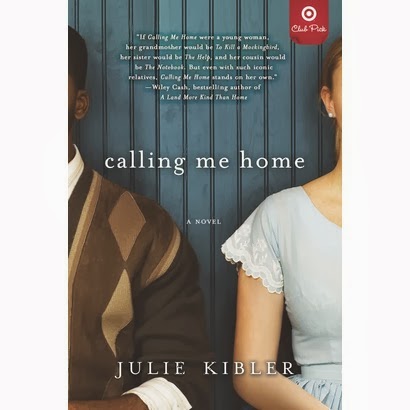
CALLING ME HOME Is Out in Paperback!

It seems like yesterday that Calling Me Home had its U.S. release in hardcover, but it's been nearly a year. And what a year! Reading through Julie's posts over the past eleven months, it's clear that for a first-time writer, the days and months after publication can be a whirlwind in ways both wonderful and tough.

And now, here she goes again. Not only will new readers pick up this terrific novel, but Target has made it their January Club Pick, which means that not only did Julie sign her name six thousand times for Target readers, but it's about to get a huge new audience. Here at WWW, we couldn't be more thrilled and cannot wait to see and hear about the success of the book.

Haven't read it yet? Head on over to Target, to your local bookstore, or even go online and order a copy, in print or e-book. It's a great read, and can we just say again how proud we are of our friend and partner, the talented and tired Julie Kibler?

If you're in the north Texas area, be sure to join Julie for a book event at Half Price Books in Plano on Thursday, Jan. 9, at 7 p.m. Some of us will see you there!

You can learn more about Calling Me Home and other upcoming events at Julie's website.

Wednesday, December 11, 2013

Going against the flow

By Julie

Every year, we make goals for our retreat before we go. Along with a few jokes about how I'm the one in charge of junk food and wandering around, I halfheartedly make some goals. Well, I take that back. I make my goals with very good intentions. But inevitably, as we go around the table in the evenings, everyone else recounting how their day went and what they accomplished, I'm saying, "I didn't get a single thing done today, as usual."
Photo credit: Christi's Flickr photostream

It always seems to come as a surprise, and yet, not a surprise, that what I accomplish at these things is not exactly what I set out to do. I know it, but I still attempt to make it happen differently. I relearn this lesson every year. (Sometimes more than once, as I've been on a few retreats like this with other groups in recent years.)

The thing is, as much as I love them, my What Women Write ladies and myself, we are not alike. The main thing being, I am a die-hard night owl with a daytime focus problem. Susan and Pamela are night owls to a degree, yet they always still seem to be up and at it fairly early in the morning. I plan to go to sleep when everyone else does and wake when they do so I can partake of "coffee" (or as it so happens with me, an iced drink), breakfast, and morning conversation, bright-eyed and bushy tailed as the rest, get right to work, and pound out the words.

Right. This never happens. Ever.

The nice thing is, I kind of figured out why this year.


At home, I am typically on fire from about four or five in the afternoon until about three in the morning, writing, working on blog posts, etc., with short breaks for picking up kids from school, making dinner, etc. Yesterday and today, I was back home and in my normal environment, waking sluggishly to the day, sipping on my iced tea midday, looking around at my Facebook newsfeed, reading blog posts, reading a book, etc., until suddenly, around 4:30 p.m., my brain switched ON.

And I was off and running.

This weekend, I'd end up doing the same thing, except I'd try to wake up early, then give in to the temptation of actually getting enough sleep, because of course I had been awake until three a.m. or later. Then when I did get up, I'd wander down to the kitchen, pour myself a glass of iced tea, and eat my "brunch," just as everyone else finished lunch and scattered back to their various writing hideouts.

A few hours later, my brain would suddenly kick in. Right as everyone else was ready to wrap things up for the day and start getting ready for dinner, I'd be truly settling into the space I'd claimed in the study of our retreat house. I'd rush to get down on paper what had been brewing in my mind most of the day, but was torn as I felt like I needed to go help in the kitchen or otherwise participate in whatever was happening. I'd usually choose to reluctantly rejoin the world, because I have to admit that having this skewed schedule always makes me feel a little out of the loop. I have that weird feeling I'll miss something important. It's that human longing to belong, I guess.

But the realization dawned: If this is the way my brain and body function at home, why on earth do I think I can change it for a weekend? Why do I think I can change it overnight?

Am I kind of crazy?

Not to mention, it typically even takes me several days after returning from vacation or traveling for book events, etc., to settle back into this routine that works. I am, in general, a wanderer. So why do I think I can settle in and really produce on a retreat that only lasts three to four days?

And then there's the fact that while I'm no longer the shy person I once was at all, I am completely an introvert. While you'd never know it from the amount of talking, laughing, and joking I do around others, people actually exhaust me. I need lots of down time to recoup the energy I expend while among them. I've spent the last two days, to a degree, recovering from all the togetherness, as fun as it was.

But in spite of all that, here's something:

This weekend was NOT worthless. 

Once I admitted to myself yet again that I probably wasn't going to get much tangible "stuff" done, I relaxed and mostly enjoyed just chilling out, having long, deep conversations with various members of our group at odd times, thinking through my own dilemma of "what I'm supposed to be writing next," and actually making some pretty big decisions about that during group read-and-critique sessions and my times of quiet contemplation, lying in my cozy twin bed in the wee hours of the morning or later when I awoke but before I emerged to be among people.

As it turns out, retreats don't work the same for all of us. Once I settle in at home, I get a lot of work done. I usually manage to partition my time and obligations fairly well and do what I need to do--often by doing it late at night. I don't necessarily need a retreat to produce words like some of my fellow writers do.

But I do need retreats to simply get away with like-minded people, get away from my everyday routine--maybe even to shake things up a bit.

If I ever decide I want to take a writing retreat where I really get words on the page, I suspect I'm going to need to find a few people who work on my schedule--and that could be pretty tricky--and most likely I'll need to be gone a hefty number of days so I have a chance to settle in well and really get going.

In the meantime, I'll enjoy these chances to hang out with my friends, my fellow writers, and accept what I receive there.

What about you, readers. How do your routines or circadian rhythms mesh with others' when you go on retreats? Or vacations? Or life in general? How well have you accepted that?


Related Posts Plugin for WordPress, Blogger...