Showing posts with label Point of View. Show all posts

Monday, December 15, 2014

Seeing from another's eyes

by Joan

Over the years the six of us have critiqued each other’s work in any number of combinations, depending on time commitments and type of critique sought, among other things. We’ve learned each other’s styles and strengths. As Kim said in an earlier post on our critique styles, “We are six very different people brought together by a mutual love of writing.” 

Over the past few months, Elizabeth and I have provided detailed feedback on our respective manuscripts. One night after a lengthy back and forth she emailed me this:

“I have to tell you, the irony of you telling me XXX needs fixed, and meanwhile I'm telling you XXX needs fixed is striking. Because we are saying the same thing pretty much about the other's MS--but in yours, it makes perfect sense to you, and in mine, it makes perfect sense to me. Had you noticed this too? :)”

Well, no, I hadn’t, until then. After drafts and revisions and rewrites and more revisions, it’s nearly impossible to be objective about your own work. Paragraphs flow in your head as if they were lyrics to a song and you hum and smile as you re-read for the sixtieth (at least) time, convinced no one could possibly find a clunky sentence. (Trust me, they will). It never occurred to me that my manuscript included the very things that trip me up in another’s work.

Along this same vein, we noticed how we differ in our reactions to plot points. I was completely convinced my character was in the wrong about a particular situation and wrote a scene with her apologizing profusely and trying to fix it, while Elizabeth couldn’t see anything wrong with my character's behavior and found the call for atonement odd. At the same time, I disagreed with one of her character’s actions while it seemed completely logical to her.

I perceive the world, and therefore fiction, from my own spyglass. My experiences, good and bad, have tinted the lens. Yours have done the same. Your view might not be the same as mine, but that doesn’t make it wrong. As a critique partner, I have a responsibility to recognize that my opinion is only that, my judgmental observation. That I need to widen that spyglass range to allow that other people don’t see the world or their lives as I do. 

Or, as the eloquent Elizabeth Berg wrote in The Pull of The Moon:

“I have wanted you to see out of my eyes so many times.” 


Friday, January 18, 2013

Perils for Pantsers

Affection
By Kim

As many of you know, I began querying my novel, The Oak Lovers, back in September. As many of you also know, the querying process can be a bit of a rollercoaster with extreme highs (full requests!) and lows (not for me, thanks) with a lot of waiting in between.

I’ve kept publicly silent, and have only shared news among my What Women Write colleagues if they specifically ask for updates. As much as I’d love the pats on the back when the highs come, and they have, the lows can be far lower when you have to relive them for an audience. After a while, the audience will start to doubt your talent even as they tell you to keep submitting. This only compounds the doubt already well-established in the minds of even the most successful among us.

Dancing
When I sent off those first queries, my terror was tempered with high praise from beta readers and two published authors. I got requests and shrugged off the inevitable rejections that also came. Over time I began to worry, though, because all the requests had come from agents with whom I had some sort of connection.

There must be something wrong with my query letter, I thought. So I rewrote my query, and then I rewrote it again. More requests came, and so did more rejections.

Eventually, I received an e-mail from an agent who gushed about my prose and said she even shared pages with her partner. She tried to pinpoint exactly why the story itself wasn’t grabbing her as she hoped. Her struggle to say no was so palpable I couldn’t even be stung by it. It did leave me thinking, though.

Sharing Secrets
I re-read my other personalized rejections, and all of the feedback I had received from beta readers. An author who loved the novel enough to give me a blurb for my queries had also warned me that while she loved it as it was, agents may ask me to "reshape" it a bit. Our own Julie Kibler had gently pointed out that one section of the book was a bit episodic and that she wasn’t entirely sure where the climax was. I thought I had addressed these issues before submitting, but had I?

It’s difficult to novelize a true story. Real life meanders instead of following a typical story arc, and meandering is already a common fault of “pantser” writers like me. I had to admit there were times I went off on tangents, desperate to work in pieces of Carl and Madonna’s true story that I loved, or that I thought would appeal to certain segments of my audience. The book probably should end shortly after the climax, not 12,000 words later, no matter how interesting or lyrical those words may be. Character arcs were defined in my head, but a tad fuzzy on the page. I had tension galore (good) but that tension did not always tie back to a central problem (bad).

Three's a Crowd
I took a deep breath, opened my scene-by-scene outline, and rewrote it. If the material enhanced character arcs or could be changed to do so, it stayed. If it did not, it went. No matter how much I loved it. No matter how many weeks I spent writing it.

Whose story was it anyway? Carl's? Madonna's? Both? Equal billing it is.

I also reconsidered point-of-view. Third person limited allows for gorgeous prose, but it shows readers the sun rather than letting them feel the warmth on their arms. This is an intimate story. Would it not be better served by shining a light into the darkest corners of a character’s heart—never mind the cobwebs or rats lurking there? First person it is.

I’m well into the revision process now, murdering darlings without remorse and reshaping and recycling what I can, which is thankfully quite a bit. The task is neither painful, nor daunting. It’s liberating. The old, truer version can be shared with relatives or passed down to my children as a family legacy.

Everyone else will just get a story.

Note: All images are details from paintings by Carl Ahrens with fictional titles.

Thursday, December 30, 2010

This story is told by WHOM?

By Julie

Not to drive voice and point of view into the ground, BUT . . .

Over the last month or two, I’ve read a few different books that really made it clear how selecting the right point of view can make all the difference.

Take a look at these novels if you haven’t already to see how the authors’ unique choices turned good plots and interesting characters into great ones.

A book from a dog’s point of view? Really?

I was resistant to reading The Art of Racing in the Rain. I kept seeing in stores for months and months, kept seeing it pop up on Facebook statuses and bestseller lists. But I had no interest in reading a book narrated by a dog. Pamela basically put it in my hands at our book trade during our annual retreat. This could have been “just” a story about a family struggling with terminal illness. And sure, the husband’s career as a race car driver was a unique twist. But then Garth Stein took it a step further by telling the story from a DOG’S point of view!

I’ve looked at my dog, Sophie, from a totally different perspective since. My mother was in a car accident the week before Christmas and has been in a hospital and skilled nursing facility for going on two weeks now. The first few days, our dog carried Mom’s slippers from her room in our home to the foot of the stairs every time we turned around, and we kind of laughed through our tears, but just patted her on the head. One evening after I returned from the hospital, I found one of Mom’s shoes in Sophie’s bed and I remembered Enzo, Stein’s close first-person … er, DOG narrator. So I took the time to explain to my obviously befuzzled and concerned dog that Mom was okay and would be home as soon as she was able to get around again.

Would I have done this before reading The Art of Racing in the Rain? Absolutely not. Now I think differently, and I keep Sophie informed about what’s happening that she might not otherwise understand. Just in case she “gets” it.

A book narrated by Death? Can a character who really isn’t a “character” narrate a story?

Apparently, Markus Zusack thinks so. The Book Thief is told in omniscient point of view by a character we soon discover is the Grim Reaper, though Death is quick to remind us that humans created that metaphor for his personally heartbreaking occupation. Zusak took things a step further. I bet his publishers were a little on edge sending a book into the world with not only a daring form of narrator, but illustrations that verge on graphic novel. The story has been one of those that pops into my mind frequently since I finished reading it. It just doesn’t let go.

A novel written as a letter blatantly addressed to an internationally feared terrorist?

In Incendiary, the close, first-person voice of a young working-class woman in London whose life is transformed by an act of terrorism is compelling enough for her unique way of seeing and feeling and telling. But Chris Cleave makes it even a little more in-the-face by writing the story as if the young woman -- whose identity is made more universal by the fact that she’s never named -- pens a letter to the one she holds responsible for ripping her husband and young son from her life. The twist near the end of the story is mind boggling, but the voice Cleave created brings the experience in so close it haunts you.

And a story told from the point of view of a five-year-old? Is this adult fiction? I don’t know about this . . .

And of course, you probably know I’m talking about Room, by Emma Donaghue, reviewed here recently by Kim. This story is chilling enough – a young woman who has raised her son in captivity, held in a tiny room where she does the best she can to create a normal life for her son. But by telling the story from the child’s close first-person point of view, the reader really gets an idea of how much he is loved by his mother and how much she has sacrificed to make his life the best she can under the circumstances.

I’ll be honest. It was a little bit of work for me to get into each of these stories, to find the rhythm of the narrators in my own brain, and to suspend disbelief, which shows what a risk it is for a writer to create such a unique voice. But I was hooked before long, and it is also clear that such a risk can pay off, not only in sales that climb lists and create author buzz (see also Cleave’s Little Bee with another gripping point-of-view character), but stories that live on in the reader’s mind for a long, long time. It makes me scrutinize the characters in the manuscript I recently completed as I read it through and begin to make revisions. I have two first-person narrators unlike any I've written before that I hope are unique enough to be a little risky, but real enough to grab my readers.

What about your narrators? How will they wow your readers?

Wednesday, November 24, 2010

A Review of Emma Donoghue's ROOM

By Kim

Synopsis (from the book jacket):

To five year old Jack, Room is the world. It’s where he was born, it’s where he and Ma eat and sleep and play and learn. There are endless wonders that let loose Jack’s imagination – the snake under Bed that he constructs out of eggshells, the imaginary world projected through the TV, the coziness of Wardrobe below Ma’s clothes, where she tucks him in safely at night in case Old Nick comes.

Room is home to Jack, but to Ma it’s the prison where she has been held since she was nineteen – for seven years. Through her fierce love for her son, she has created a life for him in that eleven-by-eleven-foot space. But Jack’s curiosity is building alongside her own desperation – and she knows that Room cannot contain either much longer.

Photo by Nina Subin
About the author (from the book jacket):

Born in Dublin in 1969, Emma Donoghue is a writer of contemporary and historical fiction whose novels include the bestseller Slammerkin, The Sealed Letter, Landing, Life Mask, Hood and Stir-Fry. Her story collections are The Woman Who Gave Birth to Rabbits, Kissing the Witch, and Touchy Subjects. She also writes literary history and plays for stage and radio. She lives in London, Ontario, with her partner and their two young children.

Review:

I have a five-year-old, and while she’s very observant and mature for her age I can’t imagine many adults would make it all the way through a novel told from her point of view. Though Room came highly recommended, I had my doubts that such a feat could be pulled off.

I was wrong.

If Jack and his Ma lived a normal life, letting him tell the story would never work, but Room is anything but a normal place. Had Ma been the narrator readers would spend the first half of the book trapped in the deepest level of hell and the last half perhaps two rungs higher. As much as I would’ve sympathized with Ma, I’m not sure I’d have had the fortitude to finish.

Through Jack’s eyes, however, Room is a magical world. On the surface, his simple recounting of the events of his birthday may seem tedious but innocent observations, such as the number of times he hears the bed creak during one of Old Nick’s visits, alert the reader as to the darker reality of the situation. The fact that Jack himself is safe in Wardrobe at the time and has no understanding of what his mother endures is a testament of her complete devotion to her child. I challenge any mother to read this novel and not be moved.

I made the mistake of reading pages 122-142 while my family was home. Three wide-eyed faces stared at me when I blurted out “Oh, my God, no!” and pulled my Jack-sized child onto my lap in a crazy yet instinctual attempt to protect a fictional boy. Half the book remained, so I knew on some level everything would work out, yet I was so caught up in Jack’s terror, seeing my daughter in his place, that I imagined all the things that could go wrong in graphic detail.

If you’re looking for a truly original story, and are open to being overwhelmed by every primal emotion – terror, love, hope and hate – gather your courage and enter Room. You won’t regret it.

Monday, November 22, 2010

Which 'person'? First or second?

By Pamela

Recently Julie took on the difficult subject of point of view. I thought it might be fun to compare one piece of writing--in both first and second person points of view. Since I didn't want to seek permission from another writer, I chose something of my own.

I have a particular affinity for first-person, since that's what my current manuscript is in but also found myself moved while reading a wonderful short story written in second person. So, for my personal blog, I wrote an essay in second person. Here I'll show you how it would read in first person, followed by the version in second person. You can decide for yourself which you prefer. Then, challenge yourself by taking a piece of your own writing and changing the POV. If you are most comfortable writing in third-person, take a scene or chapter and try it in first-person. Or change it up another way. Maybe omniscient? Or perhaps another character in the story should be telling the scene from his or her POV. Like your original version better or the revision? Let me know what you discover. 


And This Is How It Begins
First-person POV

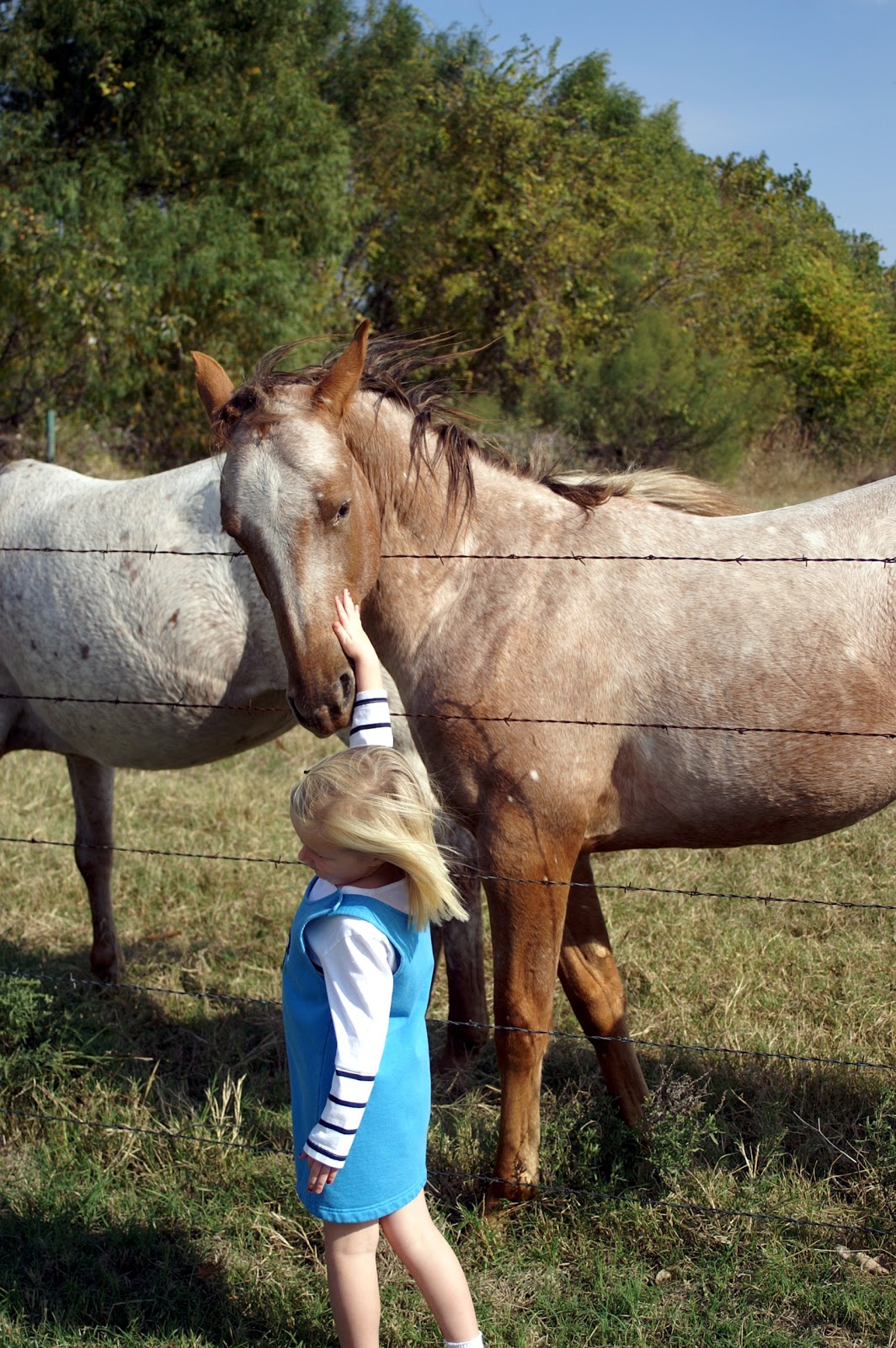
It starts on a walk through the neighborhood. I bring along a bag of carrots to feed the horses that occupy a nearby lot and notice a connection. Daughter and horses. She should be a little afraid given their big feet and huge teeth, the aggressive way they bite and stomp when another horse comes close, threatening to take the carrot she offers. But she isn’t.

Long ago she inquired about ballet and tap and tae kwon do and I stalled. Maybe someday. And then she asks about riding a horse, and I think, I can see that. Together we read Black Beauty and talk about what it means to care for a horse. We buy more books that explain tack and hands-high, and she spends hours playing the computer game Let’s Ride! Dreamer, but caring for a virtual horse is not the same.

Then later she spends a Saturday afternoon with her daddy, visiting some stables and asking about riding lessons. They form a connection with a trainer named Kate and ask me to check out some of the stables too. Like Goldilocks choosing her lot, I find one stable too fancy, one too stinky and a third that feels just right. Kate’s place.

And so we sign her up.

But first we must go shopping. Like a dancer with the right shoes or a martial artist with the right gear, she needs stuff—helmet and boots and gloves. I take her to a tack store and a teenage equestrian, with years of riding experience, shows my daughter her choices. Two helmets. One that’s good. Another that’s better. Because this is my daughter’s head and not just anyone else’s head, I figure this is not the time to save twenty dollars. The boots with zippers make the cut and choosing the gloves is easy; only one pair in the store is small enough.

On the first day of lessons, I take her to the stable and meet Kate. Then I see the massive beast my daughter is to ride. Where’s the pony? The gentle little guy who has to be bribed with sugar cubes in order to trot? But then I see the way my daughter walks up and pets this huge animal, talks to Crissy and laughs as the horse’s floppy lips nibble at her helmet. I relax just a little and try not to think about the caveat someone offered me yesterday: She’s not a true horsewoman until she’s been stepped on, bitten, kicked and thrown. Please, not today, I think.

As she mounts the horse in the center of a sawdusty ring, I take my cue to step aside. Kate’s got this. I watch this orchestration: trainer and child and beast while they form a bond. I watch the little girl I sometimes consider obstinate and argumentative and hear Kate compliment her assertiveness and confidence and think, Well, yes. That’s another way to look at it.

Thoughts of dance recitals and martial arts competitions fade away to images of future riding shows. Of one day, my daughter spending time in a barn, mucking stalls and offering apples to her best friend instead of riding in cars with boys of questionable character. I watch a beautiful teenage girl at the barn one day, long legs tucked into tall boots, her hair in a sloppy ponytail as she washes down her horse. Her boyfriend stands nearby, holding a piece of tack, clearly taking a backseat to her true love.

I can see that. I can totally see that. 


Second-person POV

It starts on a walk through the neighborhood. You bring along a bag of carrots to feed the horses that occupy a nearby lot and notice a connection. Daughter and horses. She should be a little afraid given their big feet and huge teeth, the aggressive way they bite and stomp when another horse comes close, threatening to take the carrot she offers. But she isn’t.

Long ago she inquired about ballet and tap and tae kwon do and you stalled. Maybe someday. And then she asks about riding a horse, and you think, I can see that. Together you read Black Beauty and talk about what it means to care for a horse. You buy more books that explain tack and hands-high, and she spends hours playing Let’s Ride! Dreamer, but caring for a virtual horse is not the same.

Then later she spends a Saturday afternoon with her daddy, visiting some stables and asking about riding lessons. They form a connection with a trainer named Kate and ask you to check out some of the stables too. Like Goldilocks choosing her lot, you find one stable too fancy, one too stinky and a third that feels just right. Kate’s place.

And so you sign her up.

But first you must go shopping. Like a dancer with the right shoes or a martial artist with the right gear, she needs stuff—helmet and boots and gloves. You take her to a tack store and a teenage equestrian, with years of riding experience, shows your daughter her choices. Two helmets. One that’s good. Another that’s better. Because this is your daughter’s head and not just anyone else’s head, you figure this is not the time to save twenty dollars. The boots with zippers make the cut and choosing the gloves is easy; only one pair in the store is small enough.

On the first day of lessons, you take her to the stable and meet Kate. Then you see the massive beast your daughter is to ride. Where’s the pony? The gentle little guy who has to be bribed with sugar cubes in order to trot? But then you see the way your daughter walks up and pets this huge animal, talks to Crissy and laughs as the horse’s floppy lips nibble at her helmet. You relax just a little and try not to think about the caveat someone offered you yesterday: She’s not a true horsewoman until she’s been stepped on, bitten, kicked and thrown. Please, not today, you think.

As she mounts the horse in the center of a sawdusty ring, you take your cue to step aside. Kate’s got this. You watch this orchestration: trainer and child and beast while they form a bond. You watch the little girl you sometimes consider obstinate and argumentative and hear Kate compliment her assertiveness and confidence and think, Well, yes. That’s another way to look at it.

Thoughts of dance recitals and martial arts competitions fade away to images of future riding shows. Of one day, your daughter spending time in a barn, mucking stalls and offering apples to her best friend instead of riding in cars with boys of questionable character. You watch a beautiful teenage girl at the barn one day, long legs tucked into tall boots, her hair in a sloppy ponytail as she washes down her horse. Her boyfriend stands nearby, holding a piece of tack, clearly taking a backseat to her true love.

You can see that. You can totally see that.

Wednesday, October 13, 2010

The way I see it ...


By Julie

The author, in his work, must be like God in the Universe, present everywhere and visible nowhere. ~ Gustave Flaubert

Last time I posted, I tried to give a basic primer in point of view, from my position as facilitator and definitely not expert. I promised I’d talk a little this time about how or why I select a certain point of view when I write.

Well, here’s the honest-to-God truth: Point of view chooses me.

I’d say in 95 percent of things I’ve written, I never even stopped to consider the point of view. I just started writing. I’ve written in first person and third person. I’ve used close (or limited!) third person and distant third person. I’ve never tried second or purposely tried omniscient.

Generally it just seems a story idea comes to me with point of view already chosen for me.

Sound a little nutty? A little too out there for you?

It could sound like a lot of hooey to me, too, because I tend to be a skeptic and I’m on the verge of cynical. But I am also a big believer in allowing something bigger than me to guide me in my writing and lots of other areas of life. Because I’m a skeptic, when I allow myself to be guided, it feels pretty overriding. Just plain “right.”

But I have stopped to contemplate the how and why of the points of view I’ve selected … or that have been selected for me.

Let’s consider it as given that first person tends to be very intimate. The reader is privy to nearly every thought the character has (of course, that brings to mind another kind of narrator or point of view I failed to mention last time: the unreliable narrator! Yikes!). Third person tends to be at least a little more distant.

As for me, here’s the way I figure it.

When I have a story idea, it’s almost always a very visual idea inside my head. I don’t tend to think in words alone. I am not an auditory learner at all. I struggle to listen to audio books, though they’ve come in handy at times. I really didn’t even like to be read to as a child much, and didn’t particularly enjoy reading to my own kids when they were small, poor little things. I always have to have my hands or eyes on something else while I’m listening to someone read. I am definitely tactile and probably almost as visual.

So when I am “seeing” a story in my head, I’m usually seeing it a certain way. I’m either seeing it as though: a) I’m an observer, or b) I am the character(s).

In other words, I’m either watching my character(s) acting out the story, or I am inside their head(s) acting out the story myself.

My previous manuscript used two third-person points of view. The characters, a mother and son, were extremely close and had almost identical worldviews. The story came to me in third person, and I suspect it’s because if I’d tried to write two first-person points of view, it would have been very difficult to tell the voices apart. Third person gave me a tool to show each interacting in the ways that made them different.

My current manuscript, ALL THE THINGS YOU ARE, is written in two first-person points of view. I can hear each voice, one an elderly white woman, the other a much younger African-American woman, from very different backgrounds and with very different worldviews, clearly in my head. They have different ways of speaking and dealing with the things around them. I can’t imagine this story in anything other than first person.

I like to consider it and explain it from a filmmaker’s point of view. Typically, when you watch a movie, the filmmaker either selects a fairly distant angle on a scene, where you (the audience) are observing the characters interacting with each other or with their environments, or follows right alongside the character, allowing you as the audience to see the scene just as the character is seeing it.

That’s how it is my head. And I’ve tried to fight it on occasion and it just didn’t work at all. I can play with tenses, using past or present, even change a story from one to the other, but I can’t seem to mess with point of view. It is what it is.

I suppose if a story came to me in an omniscient point of view, it would be similar to a camera panned all the way out, almost as though I were above a roofless setting, able to see every single thing going on below, no matter where it occurred or who was hiding what from another character.

I’m not sure how second person would look using this idea. And I doubt I’ll ever write a second person point of view, because I really can’t picture it using this model at all. I bet someone else could, though. Someone not me.

It may be that if you are a different kind of thinker or learner, you have to intentionally choose point of view, that you see it far differently than I do. It would be an interesting survey to match learning types with something like selecting point of view.

But if this works for you, it might help you know which point of view is right for your new story.

I’d love to hear how our readers select point of view. Do you have a similar experience, or have you actively selected whether to use first, third, or some other point of view?

Photo credit: Trenchfoot's Flickr photostream, by Creative Commons License

Thursday, September 30, 2010

Whose head is this anyway?

By Julie

I thought it might be fun to explore a few craft issues here at What Women Write.

If you’re new to writing, you might not be familiar with the term “craft.” When we study writing, we focus on different pieces of the whole – the emotional and inspirational part, the publicity and marketing part, and the nuts and bolts part, just to name a few.

Craft is the nuts and bolts part of writing. It’s the “how to.” It’s the “What the FRACK am I doing with this here piece of writing?” part.

After a while, some of these things may begin to feel like second nature, but when you’re starting out, all those trees can look like one big forest, so to speak.

Some writing terms are fairly easy. We learned about them as early as grade school.

Setting. Characters. Prologue.The ever-exciting denouement.

But I remember the first few times I heard unfamiliar writing terms after venturing into writing as a “serious vocation.” The words alone weren’t unfamiliar, but in the context of writing fiction, they suddenly seemed quite complicated, and sometimes even elusive.

Voice. Arc. Flat. Episodic. Flashback.

One particular item I thought I had down pat.

Point of view.

It turns out there is more to point of view than I ever imagined. And that brings us to today’s topic and what I hope is a simple primer in point of view. At least from my point of view, or as you might call it, too, narrator.

Typically, a story is written in one of the following types of point of view, though some talented authors are able to use a finely balanced mix of two or more. Generally, it’s a good idea for new writers to choose one and stick with it for their first few manuscripts until they have the mechanics down.

First person
This is the most easily recognizable. If you open a book and the narrator is obviously the narrator because he or she uses “I” or “me” or “my,” well, that’s a pretty good sign it’s first person. A fun and excellent example of first person writing can be found in a novel I just finished last week, Whistlin’ Dixie in a Nor’easter, by Lisa Patton.

And because I like to go in order …

Second person
This is probably the least used point of view, most likely because it’s really tricky to pull off. This is where the narrator addresses YOU as if you are the main character. For example, you might see a sentence that starts, “You walk into the room and see …” The Crimson Petal and the White by Michel Faber shows a limited use of second person, though it mainly morphs into a more traditional point of view. Lorrie Moore’s short story collection, Self Help, includes many stories told in second person.

Third person
This is probably the most commonly used point of view, generally recognizable by the use of the point-of-view character’s (or characters’) name and third-person pronouns, such as “he” and “she.” Third person can get confusing because you can also have “close” third person and “distant” third person, though other terms might be interchanged for those to mean the same thing. Distant third person can even morph into another type of point of view altogether called …

Omnisicent
Ah, what a slippery thing to define. Many words have been spent trying to describe this one. I like how the fiction writing expert at about.com describes it: Third person omniscient is a method of storytelling in which the narrator knows the thoughts and feelings of all of the characters in the story, as opposed to third person limited, which adheres closely to one character's perspective.

But you can see there how complicated it can get. I used the “close” while describing third person, whereas Ginny said, “limited.”

One reason omniscient versus third person can be confusing is because many authors morph between the two. Some well, others dismally. Thus, it’s difficult to find great examples of novels that strictly use one or the other. I found John Irving’s A Widow for One Year to be a good example of omniscient point of view. But I guarantee if you got a group of writers together, we could probably argue the point all day given a stack of books to label.

I’m going to dare to name one more point of view, though not necessarily in a positive light.

Headhopping
Generally labeled the cardinal sin of fiction writing, headhopping is when an author changes third-person viewpoint more often than is strictly reasonable. It’s okay change point of view from one character to another by chapter, and often even by scene, but when the point-of-view character changes from paragraph to paragraph, or even from sentence to sentence, it can be a bit unsettling.

It can lead to reader whiplash.

I’m honestly not sure I ever even noticed this phenomenon until I started studying craft. But it’s possible I just didn’t come across it because I managed to avoid books that employed it. Or perhaps I had the sense that something was off, but couldn’t put a finger on why.

Now it glares at me. It stops me in my tracks.

But what bothers me more than head hopping itself is not being entirely sure if the author intended to headhop … or not. I finished a book last night where there was head hopping galore. Or I think it was headhopping anyway.Though I really enjoyed the book, I found myself asking the question, “Dude, is this third-person head hopping out the kazoo, or is this some really daring form of omniscient?” It was that puzzling. Yes, we really do begin to ask ourselves these kinds of questions after studying craft for a while. It can be kind of annoying.

At any rate, those are the basic categories of point of view, though as you can see, even in this part of writing fiction, there are many variations.

Next time, I’ll talk a little about how or why I choose or have chosen to write in a certain point of view.

Any thoughts or additions? Arguments or disagreements? I’m not claiming to be an expert here, just a facilitator. Any favorite books that have used challenging or groundbreaking points of view you’d like to share with us?

Photo credit: MrGiles Flickr photostream, by Creative Commons License.

Friday, June 18, 2010

Raising a Writer

By Pamela

When my children were born, I read to them as soon as their eyes could focus on a page. They devoured their first books—literally! Teething rings had nothing on board book versions of Goodnight, Moon! or The Runaway Bunny.

I was raised a reader, not by example necessarily, but by encouragement. Books were readily available and school librarians were some of my favorite teachers. But I think raising a writer calls for a unique approach.

Having the necessary tools available certainly helps—paper and crayons to start with, advancing to pens and computers later. But learning the structure of a good story is something I wasn’t taught until later in life. In fact, I’ll admit I’m still learning the components of writing fiction, long after I feel I’ve mastered the basics of grammar and spelling.

After I wrote my first manuscript and then took the bold leap of allowing others to read it, I was shocked to learn how much I didn’t know about the elements of story. Point of view issues abounded. “Head-hopping,” Kim wrote frequently in the margins. Joan kept encouraging me to up the conflict. Me? Conflict? I avoid that at all costs in my personal life.

Determined to plant early seeds for my daughter, should she decide one day to be a writer, I’ve started grooming her, so to speak, as she learns to read. (I have two teenage boys who raise an eyebrow if I try to offer a helpful writing tip, so they’re exempt from this experiment.)

As a preschooler, my daughter eagerly accompanied me to toddler time at our local library. The librarian always introduced a book by stating the title, the author and whether it was fiction or nonfiction. When the librarian would ask what nonfiction books were about, a gaggle of toddlers would shout, “Real stuff!”

So, I took her lead and began to use our time at home as an opportunity to do more than just read texts. I began by naming the book, the author and the illustrator. While reading Stellaluna, I might remind my daughter that Janell Cannon also wrote Verdi plus she illustrated her stories. Books became more than just objects on the shelf; they were written by authors, illustrated by artists. We read bios when available and talked about the individuals as though they were friends. Once we even emailed an author and got a personalized response.

While reading, at times I'd pause mid-page and point out literary devises such as alliteration, and I took pride in the fact that, at three years of age, she knew what an onomatopoeia was. (Even though I never remember how it’s spelled!)

Now, as we’ve progressed to chapter books, I’ve upped the ante by introducing point of view. We’re reading a series of books about a horse farm with characters who are growing up and moving on as the series progresses. I stopped in the middle of book five and said, “Who were the first stories mostly about?”

“Ashleigh,” she said.

“Right,” I said. “They were told from Ashleigh’s point of view. We heard what other characters had to say, but we knew only what Ashleigh was thinking. If Charlie was in a scene, we never knew what he was thinking because it was in Ashleigh’s point of view. She could tell us what she thought Charlie might feel because of his actions, but we never knew for sure. Whose point of view is this book in?”

“Samantha?” she asked.

“Yes,” I said. “Ashleigh is still a character, but now we know only what Samantha is thinking or feeling since it’s in her point of view.”

We talked a little about conflict—about what makes a story interesting—how if everything on the horse farm was always good, then the book would get pretty boring. And if Samantha’s horse won every race, then the parts about the track would be predictable and we’d lose interest.

I’m careful to not make reading too much about the craft for fear she’ll view our “snuggle time” as a sly version of home-schooling. But I want her to know there’s more to building a story than just tossing text onto a page, so we also discuss protagonists and antagonists, conflict and resolution. Big words, maybe, but she gets it in the same way she recalls names of dinosaurs and absorbs concepts such as evaporation and pollination.

My goal here is two-fold: I want her to appreciate writers and illustrators—what makes books treasures, plus I’d like her to understand what’s involved in composing a good tale. Maybe someday she’ll become a writer. Or maybe she won’t. If she does, I’m betting her first critique partners won’t have to do quite as much work as mine.

Wednesday, May 19, 2010

Multiple Mania!

By Julie

I'm taking a crash course in my latest manuscript. I'm writing not only from different points of view, but in different settings and times in history. I've written from at least two points of view in each long manuscript I've written or dabbled in, but the multiple setting and time periods thing is new and certainly a challenge.

For research, I've been checking out relevant online articles and studying the books I'm reading carefully to see how the authors handled similar challenges. I thought I'd share a few of my favorite resources so far with our What Women Write readers.

As Joan mentioned in her personal blog the other day, Donald Maass posted a series recently on Writer Unboxed. Like Joan, the series couldn't have come at a better time for me, especially Part III, posted just last week.* In this installment, Maass discusses how using multiple points of view can enhance your story. He says, ". . . readers respond powerfully to a sense of vastness, a depth and sweep, being transported, journeying far and yet feeling at home. It may be easier to evoke all that with multiple points of view."

That was enough to reassure me my current process is worth the effort. But Maass went on to say that just having multiple points of view is not enough, that "To create a true sense of scale, every characters' storyline must be equally absorbing."

And he could have just left it at that, but he doesn't. He provides a series of questions I've copied and pasted at the bottom of my current manuscript. Each time I contemplate them, I make notes and dig a little deeper into the multiple points of view I'm attempting to write. In Maass's words, I'm building scale into the story. I hope.

Then, last week, I happened upon a link posted by my friend Lisa on her Facebook page. On the surface, this article, Strategies for Writing About Loss (by Robin Black, author of IF I LOVED YOU, I WOULD TELL YOU THIS, guest posting on Beyond the Margins), sounded like a good resource almost any way you look at it. Most of us choose to write about loss in some form or fashion. Black's focus in the article is on how to write about loss in such a way that makes it unique and different. But the deeper I dug into the article, the more I realized how much it spoke to me about my multiple POV/setting/time period challenge. She suggests:

"There are also strategies for defamiliarizing stories that might sound, in summary, like a million others stories that have come before. . . . One possibility to consider is an intertwining, secondary plot line that both contrasts and resonates with the central one."

Aha! and Oh, yeaaaaah! I thought as I read those sentences. That's why I began writing my modern day point-of-view character to begin with in ALL THE THINGS YOU ARE, my current manuscript! I just needed a little reminding when things started to feel a little confused and overwhelming. And that whole article is packed full of some good stuff.

Finally, I recently polled my Facebook friends, asking what books they'd read that used multiple points of view in different time periods and preferably different settings. Joan was spot on again with her recommendation of THE FORGOTTEN GARDEN, by Kate Morton. I gobbled up this hefty novel last week and came away from it thinking, well, if she can do it and make it work, so can I. She juggled even more POVs and time periods than I'm attempting, all to good effect. She talks about the process here on her fascinating website.

With a little help from my friends, some excellent articles, and the best research for writing fiction ever – READING – I feel like I'm well on my way to wrapping my head around this challenge.

What about you? Any additional words of wisdom or resources or just feel like commiserating because you're attempting something similar? We'd love to hear from you.

* Any writer at any stage could benefit from reading all three installments of Maass's excellent series, The Elements of Awe -- Part I here; Part II here; Part III here.
Photo credit: Daniela Vladimirova's Flickr photostream by Creative Commons License
Related Posts Plugin for WordPress, Blogger...